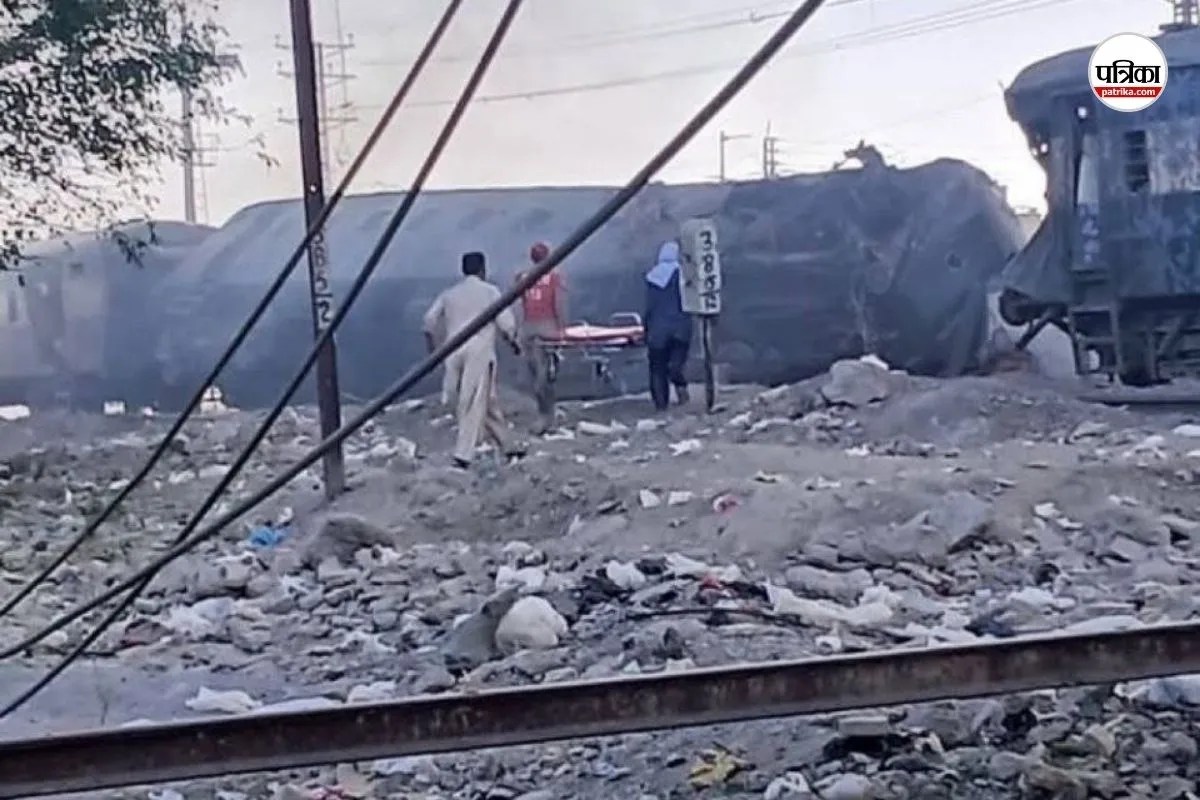
The suicide bombing at the Quetta railway station in Balochistan, which resulted in 26 fatalities and over 70 injuries, represents a calculated disruption of regional transport architecture rather than a random act of violence. Mass-casualty attacks on transit hubs function under a specific operational calculus: maximizing human density, exploiting civilian-military convergence points, and triggering disproportionate economic friction. By analyzing this strike through the lens of asymmetric warfare and infrastructure security, we can isolate the specific vulnerabilities exploited and the systemic failures that enabled the breach.
The incident occurred at approximately 8:25 AM at a crowded platform where passengers were boarding the Peshawar-bound Jaffar Express. The composition of the casualties—which included both civilian commuters and military personnel from the Infantry School—underscores the dual-purpose targeting strategy common in insurgent campaigns. To understand why Quetta remains a high-velocity target, we must dissect the security architecture, the insurgent methodology, and the compounding geopolitical variables driving the conflict in Balochistan.
The Triad of Transit Vulnerability
Physical infrastructure assets like railway stations are inherently difficult to secure due to three competing operational demands: open accessibility, high throughput, and restricted physical footprints. Insurgent groups, specifically the Balochistan Liberation Army (BLA) which claimed responsibility through its suicide squad (the Majeed Brigade), exploit these variables systematically.
High Human Density as a Force Multiplier
Transit hubs accumulate large numbers of individuals in predictable, confined spaces. The Jaffar Express is a primary artery connecting Balochistan to northern Pakistan, meaning platforms experience peak density at specific, publicly available times. For an attacker utilizing an improvised explosive device (IED) strapped to their body, a dense crowd eliminates the need for precision delivery. The shockwave and shrapnel dispersion are maximized mechanically by the surrounding human mass, turning individuals into secondary barriers that contain the blast energy, thereby increasing lethality within the immediate radius.
The Problem of Mixed Demographics
The presence of military personnel within civilian transit streams creates a high-value target profile without the corresponding hardening of a military installation. Soldiers returning from training or deployment utilize commercial rail due to cost and logistical routing. For the BLA, striking a platform containing uniform-wearing personnel achieves a dual political objective: it inflicts direct losses on the state's security apparatus while signaling to the domestic population that the state cannot guarantee safety even within its own transport networks.
Chokepoint Exploitation
Railway stations are designed to funnel human traffic through specific channels—ticketing counters, waiting rooms, and platform gates. While these chokepoints are intended to facilitate ticket validation and basic security screenings, they simultaneously act as staging grounds for mass casualties. If security personnel establish a perimeter check at the entrance, the queue itself becomes the new soft target. In the Quetta strike, the attacker detonated the payload inside the station platform, indicating a failure to intercept the threat at the secondary outer perimeter.
The Mechanics of the Security Breach
A critical analysis of the Quetta incident reveals a breakdown across multiple layers of the defensive matrix. In high-threat environments, security cannot rely on a single checkpoint; it requires a deep, intelligence-driven sequence of mitigations.
The primary failure occurred in the intelligence-to-action pipeline. Balochistan has been under an elevated threat advisory for months, with specific warnings regarding Majeed Brigade operational shifts toward high-profile urban centers. The failure to translate generalized threat intelligence into tactical denials at the station gates points to a systemic breakdown in inter-agency data sharing.
The secondary failure lies in the kinetic screening process. Standard railway security in regional hubs often relies on passive metal detectors and manual luggage inspections. These tools are ineffective against body-borne IEDs (BBIEDs) concealed beneath traditional, loose-fitting attire unless supplemented by rigorous behavioral profiling and physical pat-downs. The attacker bypassed these checks, suggesting that either the screening equipment was non-operational, the security personnel suffered from vigilance fatigue, or the entry point was breached through a blind spot in the physical perimeter fencing.
Furthermore, the blast dynamics inside a covered station platform amplify injuries. The structural roof and pillars reflect the blast overpressure wave rather than letting it dissipate into the open air. This containment effect causes severe primary blast injuries—such as pulmonary barotrauma and tympanic membrane rupture—at greater distances than would occur in an open-field detonation.
Economic and Geopolitical Cost Functions
The Quetta railway strike cannot be viewed in isolation from the broader macroeconomic realities of Pakistan and the regional interests of external actors. Balochistan is the geographic linchpin of the China-Pakistan Economic Corridor (CPEC), a multi-billion-dollar infrastructure network.
[Insurgent Kinetic Strikes]
       │
       ▼
[Elevated Risk Profiles] ──► [Surging Insurance & Security Overhead]
       │
       ▼
[Capital Flight / Project Stagnation]
Insurgent strategy aims to alter the cost-benefit analysis for foreign investors, particularly Beijing. By demonstrating that key transport links are unstable, the BLA enforces an economic penalty on the Pakistani state through several mechanisms:
- Premium Inflation: Every successful attack on infrastructure drives up the insurance premiums and security overhead costs for ongoing development projects.
- Labor Deterrence: High-profile attacks target the confidence of non-local engineers, technicians, and laborers, making talent acquisition for infrastructure projects in Balochistan unsustainably expensive.
- State Resource Diversion: To counter the asymmetric threat, the state must reallocate scarce capital from infrastructure development to static security deployments, creating a drain on the national treasury.
This economic attrition strategy aims to force a structural retreat of federal authority from the province by making the occupation and administration of Balochistan financially unviable.
Operational Realities and Tactical Limitations
Developing a completely impenetrable transit network is an operational impossibility. Hardening a facility like the Quetta railway station to the level of an international airport terminal introduces friction that can cripple the efficiency of rail transport.
If authorities implement long wait times, rigorous body scans, and restricted access for non-passengers, the logistical throughput of the railway drops sharply. In a developing economy, railways are a vital low-cost transit mechanism; imposing excessive security friction can paralyze regional commerce.
Additionally, the geography of Balochistan—characterized by vast, arid expanses and isolated population centers—makes the physical tracks themselves highly vulnerable. Even if stations are secured perfectly, the thousands of kilometers of open rail remaining unprotected present an ongoing vulnerability to sabotage, derailments, and ambushes.
Tactical Realities of Counter-Asymmetric Warfare
Mitigating the threat of infrastructure terror requires shifting from a reactive, static defense posture to an active, intelligence-driven denial strategy.
The first priority must be the implementation of stand-off detection capabilities. This involves moving the security perimeter away from the architectural chokepoints of the station. Creating multi-tiered exclusion zones where individuals are observed and profiled prior to entering enclosed spaces reduces the potential lethality of a BBIED. Utilizing canine units trained in explosives detection at these outer perimeters provides a mobile, adaptive layer of defense that cannot be easily bypassed by changing clothing or exploiting technological blind spots in metal detectors.
The second priority demands the integration of biometric and video analytics at transit access points. Passive surveillance cameras must be upgraded to include real-time anomaly detection and facial recognition linked to federal counter-terrorism databases. This allows security personnel to identify known affiliates of proscribed organizations before they reach high-density platforms.
Ultimately, physical security measures at platforms are merely stopgaps. The long-term stabilization of the transit corridor depends on dismantling the operational infrastructure of the Majeed Brigade at its source. This requires deep human intelligence penetration of insurgent logistics networks, mapping the illicit financial flows funding explosive procurement, and disrupting the safe havens where suicide operatives undergo indoctrination and tactical training. Until the intelligence apparatus can get ahead of the insurgent planning cycle, high-density transit nodes will remain the preferred theater for asymmetric actors seeking maximum political and economic disruption.