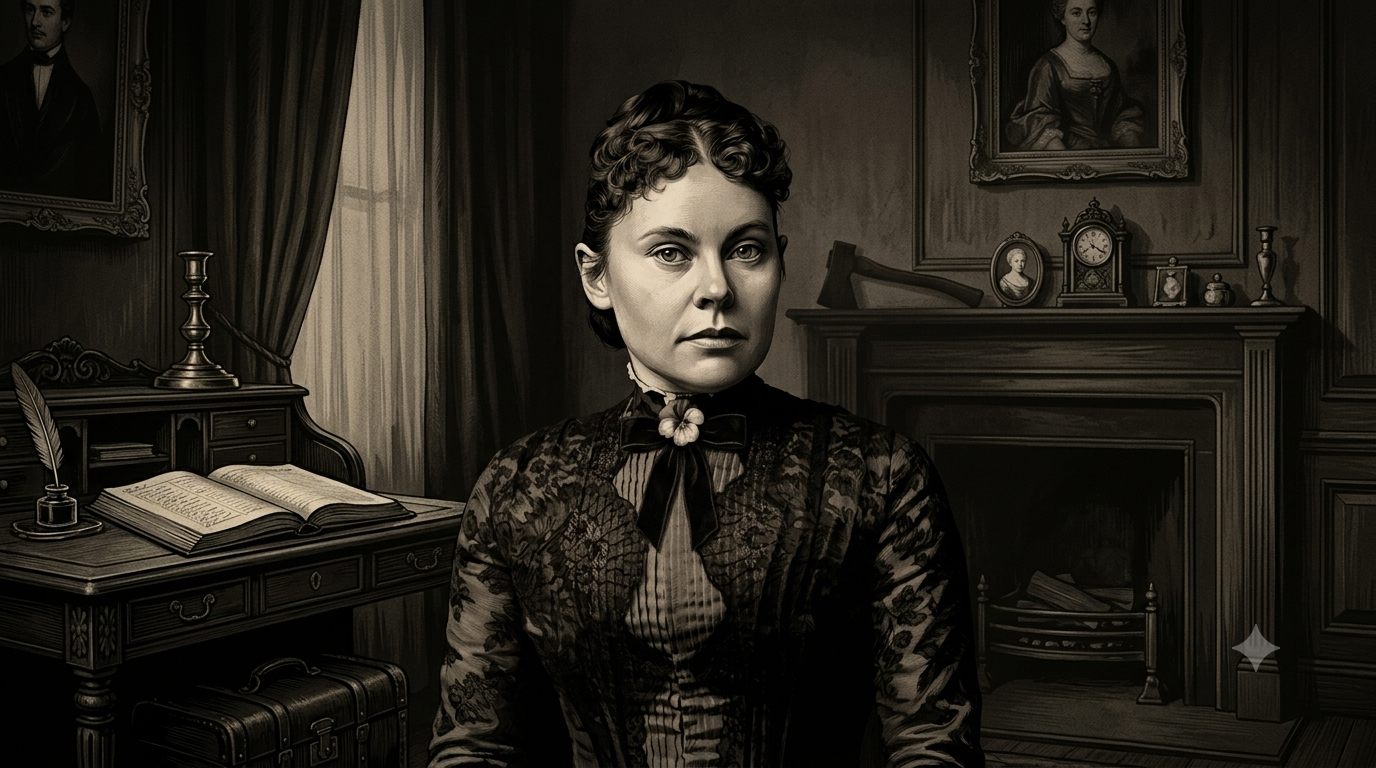
On August 4, 1892, two bodies lay mutilated inside a Fall River, Massachusetts home, cleaved by repeated hatchet blows. The subsequent legal and cultural fallout transformed Lizzie Borden into an enduring archetype of American true crime. When television creators adapt historical atrocities, they confront a fundamental structural friction: real-world criminal investigations are defined by ambiguity, missing evidence, and administrative inertia, whereas narrative drama requires intentionality, moral clarity, and escalating stakes. Ryan Murphy and Ian Brennan’s treatment of the case in Netflix’s Monster: The Lizzie Borden Story abandons strict historical fidelity to engineer a psychological autopsy of institutional suffocation, trading documentary precision for thematic resonance. Examining this dramatization alongside the empirical record reveals how cultural artifacts manufacture mythology from cold forensic data.
The Economic Architecture of Victorian Confinement
To understand the mechanics of the Borden household, one must analyze the incentive structures and resource constraints governing upper-middle-class life in late-nineteenth-century New England. Andrew Borden accumulated significant wealth through real estate and manufacturing, yet lived with an austere frugality that bordered on self-deprivation. This financial hoarding created a closed-loop ecosystem of domestic tension. In the television adaptation, this dynamic is amplified into an oppressive physical and psychological cage, utilizing visceral imagery like tight corsets and stifling dinner parties to externalize the suffocation experienced by its subjects.
Empirically, the Borden sisters, Lizzie and Emma, faced a stark economic reality. Unmarried women in Victorian society possessed severely restricted agency in capital acquisition and asset management independent of male relatives. Their stepmother, Abby Borden, occupied an ambiguous status within the household hierarchy, managing domestic labor while holding no independent legal claim to Andrew’s primary wealth accumulation. This environment generated a zero-sum game regarding inheritance, social mobility, and living standards. The dramatization exploits this economic friction, positing that domestic violence became the sole remaining instrument of self-determination for individuals trapped within an unyielding patriarchal framework.
Evidentiary Realities Versus Artistic License
True crime adaptation requires filling historical gaps where forensic science was primitive or nonexistent. The trial transcripts from 1893 reveal a staggering array of investigative failures, compromised crime scenes, and contradictory testimonies. Investigators failed to thoroughly test bloodstains, neglected to examine potential weapon alternatives immediately, and relied heavily on circumstantial witness accounts.
The Netflix series bridges these historical gaps by introducing specific narrative drivers that did not occur in reality. For instance, the depiction of Lizzie engaging in a premeditated conspiracy with maid Bridget "Maggie" Sullivan—including a trial run murder of a neighbor and a romantic entanglement—represents pure dramatic fabrication. Historical documentation indicates a distant, transactional relationship between Lizzie and Bridget, with Lizzie frequently mispronouncing the maid's name. Similarly, the dramatic inclusion of pharmacist interactions, poison attempts involving spoiled oysters, and direct mentorship from actress Nance O’Neil diverge sharply from the timeline established by historical archives.
These deviations serve a specific structural function. They transform a chaotic, murky domestic crime into a deliberate, ideological rebellion. By substituting historical ambiguity with calculated execution, the narrative constructs a cohesive cause-and-effect chain where real-world evidence remains stubbornly inconclusive.
The Jurisprudence of Gender and Class Prejudice
The 1893 courtroom drama that resulted in Lizzie Borden’s acquittal cannot be understood without analyzing the systemic biases of the Massachusetts legal system at the time. The defense strategy relied heavily on leveraging Victorian assumptions about female biology and social class. Prosecutors faced an insurmountable cultural barrier: the prevailing ideology of the era deemed it psychologically impossible for a woman of refined social standing and church-going habits to commit such a brutal, physical crime.
The defense effectively framed the prosecution’s case as an assault on respectable womanhood. Jurors deliberated for a remarkably short period before returning a verdict of not guilty, influenced not merely by the absence of a smoking gun or bloody garments, but by the social impossibility of the accusation within the worldview of the judiciary. The modern dramatization captures this underlying systemic dynamic, highlighting how the performance of Victorian femininity acted as an effective legal shield. The trial scenes illustrate that the courtroom was not a neutral arbiter of objective truth, but a stage where class privilege and gender expectations dictated the burden of proof.
Post-Acquittal Isolation and the Burden of Notoriety
An acquittal in a court of law does not equate to social exoneration. Following her release, Lizzie Borden remained trapped by public consensus, ostracized by the very elite society whose values she had allegedly weaponized. She relocated to Maplecroft, a grand house in Fall River, funded by her inheritance, yet lived an increasingly isolated existence until her death in 1927.
The adaptation explores this post-trial trajectory by examining the psychological cost of permanent notoriety. While the series injects surreal narrative convergence—such as thematic ties to later criminal figures like Aileen Wuornos—to comment on female rage across historical epochs, the underlying historical reality remains stark. Lizzie's relationship with her sister Emma eventually fractured, accelerated by community friction and social ostracization. The public refused to separate the legal verdict from the intuitive horror of the crime, turning her home into a permanent monument of suspicion.
The Strategic Function of True Crime Spectacle
The enduring commercial viability of the Lizzie Borden narrative illustrates a broader operational principle in modern entertainment: historical atrocities function as blank canvases for contemporary anxieties. By refracting nineteenth-century domestic terror through a twenty-first-century lens focusing on misogyny, class warfare, and systemic oppression, creators bypass dry biographical recitation in favor of emotional resonance.
Audience engagement with true crime is driven by the desire to reverse-engineer order from chaos. Whether examining the primitive forensic environment of 1892 or evaluating the calculated risks of modern prestige television production, the core endeavor remains the same. Observers seek to map human behavior at its absolute margins, dissecting the precise breaking point where institutional pressure transforms ordinary domesticity into catastrophic violence. The value of such retellings lies not in their literal transcription of historical minutiae, but in their capacity to illuminate the enduring vulnerabilities embedded within social structures.


