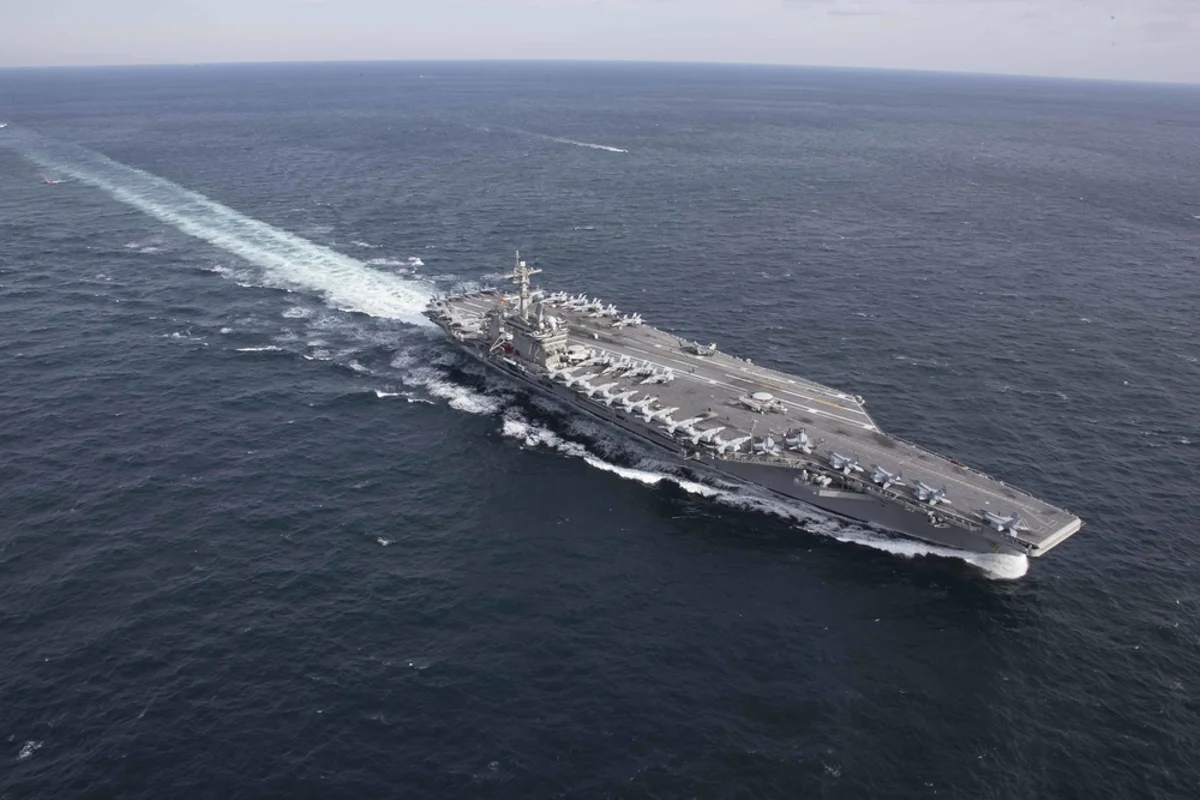
Extended naval deployments expose a fundamental friction point between strategic military demand and human logistical limits. When a nuclear-powered aircraft carrier like the USS Abraham Lincoln spends more than nine consecutive months at sea, the breakdown of conditions on board is rarely the result of a single catastrophic failure. Instead, it represents the systemic compound interest of cumulative stressors acting on closed-loop ecosystems. To understand why extreme deployments degrade into operational crises, one must examine the operational math, supply chain bottlenecks, and human performance limits that govern prolonged maritime operations.
The Operational Equation of Extended Deployment Cycles
Naval deployment lengths are dictated by a macro-level supply and demand mismatch. The global combatant commander requirement for naval presence consistently outstrips the total available hull inventory. When a carrier strike group is extended beyond its standard six-to-seven-month deployment window, military planners are substituting time for inventory.
This substitution creates a non-linear decay curve in three primary domains:
- Mechanical maintenance tolerance limits
- Consumable supply chain integrity
- Crew cognitive reserve and physiological baseline
A ship at sea is a closed environment operating under continuous mechanical and thermal stress. Valves cycle, pumps cavitate, electrical windings heat up, and water purification systems process thousands of gallons of seawater daily under high-pressure parameters. When deployment timelines stretch past 200 and eventually 270 days, components that were engineered for specific operational intervals begin exceeding their mean time between failures.
Compounding the hardware strain is the logistical challenge of replenishment at sea. While fuel and dry provisions can be transferred via underway replenishment ships, specialized aviation repair parts, microelectronics, and proprietary replacement assemblies cannot be reliably provisioned mid-ocean. The inventory of onboard spares follows a depletion curve that accelerates as secondary and tertiary failures cascade through interdependent systems.
The Microclimate of Isolation and Environmental Degradation
Living spaces aboard a deployed carrier function as tightly packed micro-communities where environmental controls operate near maximum capacity. Air filtration, humidity regulation, and sewage management systems run continuously under high occupancy rates.
When a deployment stretches past normal parameters, maintenance deferrals on these life-support systems become unavoidable. A single broken air conditioning plant in a compartment housing sixty sailors shifts thermal loads to adjacent systems, raising ambient temperatures and humidity. Elevated humidity accelerates corrosion on electrical contacts and increases the proliferation of mold within ductwork.
The physiological impact of this environment directly degrades crew performance:
- Chronic sleep disruption caused by spatial crowding, noise pollution, and 24-hour watch rotations
- Dietary monotony resulting from fresh food exhaustion, leading to reliance on long-shelf-life rations with lower micronutrient profiles
- Limited physical activity space, which restricts cardiovascular maintenance and physical stress mitigation
These factors combine to form an invisible tax on human cognition. Reaction times lengthen, error rates in routine maintenance tasks increase, and the threshold for interpersonal conflict drops significantly within berthing compartments.
The Maintenance Debt Accumulation Model
Every day a vessel remains deployed beyond its planned operational window, it incurs a specific type of liability known as maintenance debt. This debt is not merely financial or temporal; it is structural.
In a standard operating model, a deployment is followed by a scheduled incremental maintenance availability or a complex overhaul. During these periods, systems are torn down, inspected, and rebuilt. When the deployment horizon is extended by months, shipyard availability slots are thrown into disarray. The subsequent maintenance period must absorb a massive surge in unpredicted corrective maintenance alongside the scheduled preventive work.
This creates a cascading systemic failure for fleet readiness:
- The extended deployment burns through the operational lifespan of critical hull, mechanical, and electrical components.
- The delayed return home pushes the start date of the next major overhaul into the future.
- The compressed turnaround time for the subsequent crew leaves less time for integrated strike group training, increasing the likelihood of friction during the next deployment cycle.
The strategic cost of an extended deployment is thus paid twice: first in the deteriorating quality of life and system reliability experienced by the current crew, and second in the compressed, high-stress training and maintenance pipeline inflicted upon the next rotation.
Strategic Allocation and Institutional Friction
The persistence of ultra-long deployments points to an underlying structural rigidity in defense logistics. Combatant commanders view the aircraft carrier as a mobile, sovereign instrument of deterrence that can be held on station indefinitely to signal commitment or manage emerging crises.
However, treating a finite human and mechanical system as an infinitely elastic resource violates core principles of operational risk management. When high-tempo operations outpace the replenishment of human capital, the organization shifts from proactive management to reactive damage control.
Mitigating this cycle requires aligning operational tempo strictly with the replacement velocity of both machinery and personnel. Until force structure models reflect the hard physical and psychological limits of closed-system deployments, extended deployments will continue to trade short-term political signaling for long-term organizational and human capital erosion.