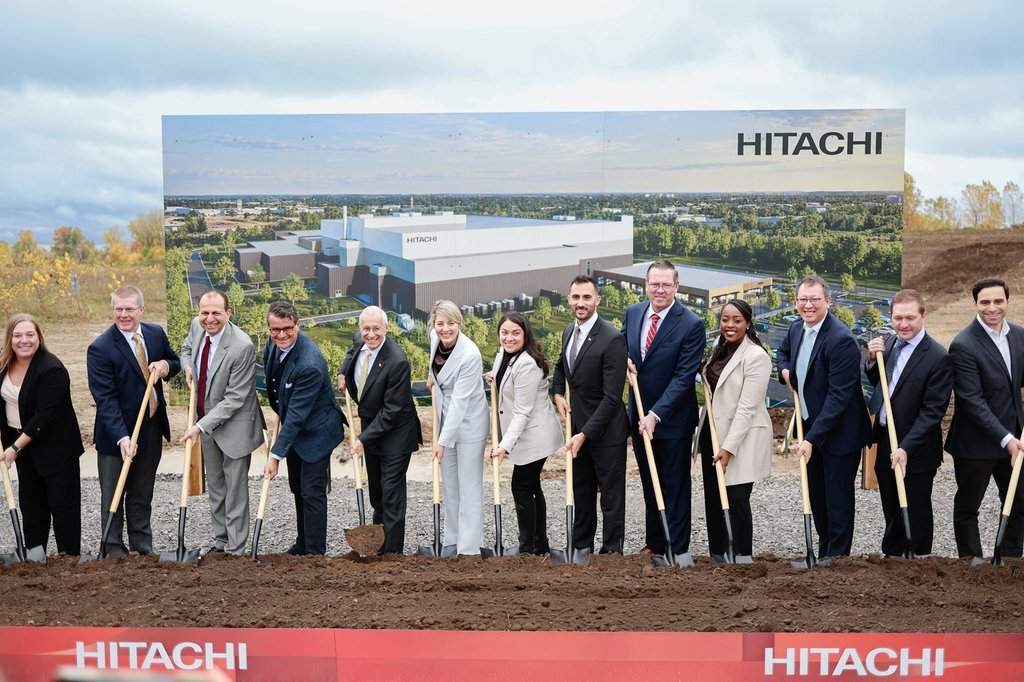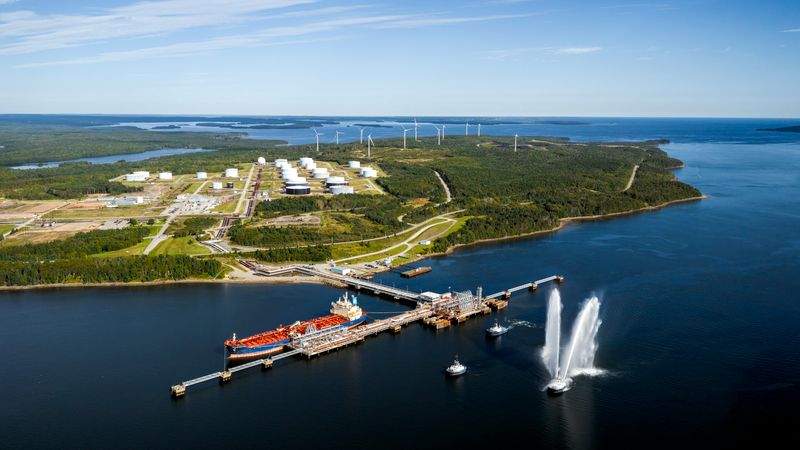
Headline capital figures—such as EverWind’s proposed $10 billion investment in a Point Tupper, Nova Scotia data centre campus and wind portfolio—obscure the real engineering and financial test of co-locating intermittent generation with high-density compute. Standard coverage treats a headline dollar total and an anchor AI lease as proof of execution. In practice, capital allocation on a compact provincial grid succeeds or fails on power firmness, interconnection sequencing, thermal management, and regulatory durability.
This analysis strips away press-release optimism to map the structural mechanics behind the Point Tupper plan. Readers get a rigorous breakdown of where standard coverage stops short, how the project's cost and load dynamics interact, what questions arise around grid and water constraints, and how operators evaluate execution risk before capital is locked in.
Deconstructing Standard Coverage
Conventional reporting on large infrastructure announcements follows a predictable arc: state the headline investment size, cite projected construction and permanent job counts, note political endorsements, and quote executive optimism. That narrative structure leaves three analytical blind spots that matter far more to capital discipline than headline scale.
First, headline capital totals blend distinct asset classes with different risk profiles and timelines. A $10 billion figure spanning data centre halls, on-site or attached generation systems, and multi-project wind buildouts conflates commercial real estate and compute fit-out with weather-dependent power generation. Treating them as a single monolithic commitment hides where capital is gated by permits, interconnection studies, or customer milestones.
Second, standard articles treat "wind-powered compute" as a simple pairing rather than a time-synchronization problem. Wind output fluctuates with meteorological conditions, whereas artificial intelligence training and inference clusters require continuous, tightly regulated power delivery. Calling a campus wind-backed does not explain how hourly deficits and surpluses are balanced without destabilizing local feeders or shifting costs onto other users.
Third, surface reporting often stops at policy pledges rather than testing enforceability. Public commitments regarding ratepayer protection, water use, and phased grid integration carry very different weight depending on whether they exist as voluntary statements, utility tariff terms, or binding statutory rules.
The Three Pillars of Co-Located Compute and Wind
To evaluate whether a Cape Breton buildout can move from announcement to dependable operation, separate the architecture into three interlocking pillars: firmness engineering, capital and cost allocation, and institutional alignment. Weakness in any one pillar constrains the other two.
Firmness Engineering and Load Shaping
AI compute workloads exhibit sharp power ramps and high utilization targets, making voltage stability and frequency response critical. When a large load connects to a smaller regional grid like Nova Scotia's before full buildout of dedicated generation, the system faces a timing mismatch between immediate compute demand and multi-year wind construction.
Three operational mechanisms govern whether load behaves as a grid liability or a controllable asset:
- Phased capacity staging: Bringing capacity online in stages—starting with an initial block and scaling toward a larger multi-hundred-megawatt target—allows system operators to observe real load behavior before committing the full expansion.
- Flexible load and battery buffering: Pairing battery storage with adjustable compute scheduling lets the facility absorb variable wind output and curtail or shift grid draw during tight system intervals.
- Backup and thermal-electric coupling: Where supplemental generation or closed-loop cooling systems are involved, auxiliary power and heat-rejection equipment introduce their own fuel, maintenance, and resource dependencies that must be modeled alongside wind variability.
Cost Function and Ratepayer Ring-Fencing
A central economic question for any large industrial load is who pays for network reinforcement. Adding hundreds of megawatts of potential demand to a provincial network can require substation upgrades, transmission reinforcement, and reserve margin adjustments.
The cost function for the developer includes direct site capital, connection and network upgrade charges attributable to the project, battery or generation capex, and ongoing operating expenses. For existing residential and commercial ratepayers, the key economic test is ring-fencing: ensuring incremental connection, equipment, and supply costs are assigned to the new large customer rather than socialized across existing bills. Utility rules and regulatory oversight determine how cleanly those boundaries hold over time.
Institutional Alignment and Social License
Large industrial projects in Canada increasingly hinge on regulatory clarity, municipal and provincial posture, data sovereignty alignment, and Indigenous economic participation. Federal emphasis on domestic AI compute capacity can strengthen strategic backing for projects anchored by long-term anchor tenants, while provincial leadership sets the pace on permitting and industrial policy.
At the same time, opposition and scrutiny often center on governance process—specifically whether protections for water, land, and electricity rates are codified or left to executive assurance. Negotiating equity participation with local First Nations entities can align long-term regional incentives, provided commercial terms, environmental reviews, and consultation obligations are resolved transparently.
Cause-and-Effect Dynamics Missed in Surface Summaries
Several second-order effects connect technical choices at Point Tupper to commercial and political outcomes.
Grid Timing Creates a Transitional Dependency
If a data centre phase enters service ahead of full wind project completion, interim power must come from the existing grid or on-site generation. That creates a transitional dependency: short-term reliability and emissions intensity depend on prevailing provincial generation mix and system studies, even if the long-term vision leans heavily on wind. Any delay in wind permitting or transmission interconnection stretches that transitional window.
Cooling Architecture Links Electricity, Water, and Noise
High-density compute generates intense localized heat. Closed-loop cooling reduces continuous water intake compared with once-through open systems, yet evaporation losses, make-up water requirements, and auxiliary equipment loads still matter. When thermal management or supplemental turbines rely on water or mechanical heat rejection, water availability and acoustic limits become hard site constraints rather than secondary footnotes.
Policy Commitments Versus Statutory Certainty
Political support accelerates initial momentum, but long-dated infrastructure capital faces multi-year political cycles. Relying solely on policy pledges leaves projects exposed to shifting regulatory interpretations or legal challenges. Conversely, clear tariff rules and enforceable conditions slow early paperwork slightly while reducing late-stage project reversals.
Core Questions Behind the Buildout
- How does a provincial grid absorb hundreds of megawatts of AI load? System operators evaluate peak coincidence, fault levels, voltage stability, and ramp rates. Load flexibility, battery dispatch, and phased interconnection allow the utility to stage capacity rather than absorbing an abrupt step change all at once.
- Why pair data centres with regional wind projects? Wind offers zero marginal fuel cost once built and aligns with corporate decarbonization and domestic compute goals. However, wind alone is non-dispatchable, so commercial viability requires firming arrangements, grid balancing, or long-term offtake structures that match customer reliability requirements.
- What determines whether local communities benefit? Net value depends on how construction and permanent operations jobs are filled, whether ratepayer costs are genuinely ring-fenced, how water and environmental impacts are monitored, and whether local or Indigenous partners hold meaningful economic stakes.
Fact Versus Hypothesis in Evaluating Execution
Disciplined analysis separates verified project parameters from forward-looking assumptions.
Known Facts and Verified Parameters
- EverWind has announced plans for a multi-billion-dollar AI data centre campus in Point Tupper, Nova Scotia, alongside wind power development.
- The proposal includes phased buildout milestones, a long-term lease structure supporting initial capacity, and commitments regarding incremental grid connection costs and closed-loop cooling.
- Grid interconnection and expansion remain subject to system studies, permitting, and regulatory approvals.
Educated Hypotheses and Unresolved Variables
- Schedule adherence: Targeted late-2027 and 2028 milestones assume timely permitting, equipment supply chain delivery, and smooth grid integration—any of which can slip on complex industrial builds.
- Net grid impact: Whether flexible load and storage make the campus a net reliability stabilizer on Nova Scotia's grid will be proven through engineering studies and live dispatch performance rather than design intent alone.
- Commercial bankability at full scale: Moving from initial phase commitments to full multi-phase capital deployment depends on sustained hyperscaler or AI developer demand, power pricing economics, and finalization of partnership and equity structures.
Step-by-Step Due Diligence Framework
Practitioners evaluating or executing an integrated wind-and-compute development can apply a five-step operational sequence:
- Audit phase boundaries and capex gating. Separate committed initial-phase spend and anchor customer obligations from conditional later phases so capital exposure is tied to verified milestones.
- Model hourly wind-to-load alignment. Stress-test generation profiles across low-wind periods alongside battery duration and grid import limits to quantify firming costs.
- Verify cost-allocation ring-fencing. Confirm that connection upgrades, network reinforcement, and reserve requirements are contractually and regulatorily assigned to the project rather than general ratepayers.
- Stress-test water and thermal envelopes. Quantify peak cooling demand, make-up water draw, and ambient temperature derating across worst-case seasonal conditions.
- Track permitting and stakeholder agreements as critical-path gates. Treat environmental approvals, utility studies, and Indigenous or municipal agreements as hard schedule drivers rather than parallel checklists.
Limitations and Boundary Conditions
No single infrastructure model eliminates execution risk. Large industrial and data centre developments carry inherent exposure to construction cost inflation, high-voltage equipment lead times, permitting delays, and shifting AI compute economics. Furthermore, wind generation cannot replace dispatchable firm capacity on its own without storage, transmission, or backup resources, and strict ring-fencing rules can increase upfront project costs for the developer.
Strategic Play
Anchor capital allocation and risk underwriting around verified interconnection and firmness gates rather than headline investment announcements. For investors, utilities, and policymakers tracking the Point Tupper buildout, the decisive signal is not the size of the initial headline figure, but binding milestones across three areas: completed grid impact studies for each megawatt block, enforceable cost-allocation terms that protect existing ratepayers, and demonstrable battery-backed load flexibility on the system. Execute and evaluate the project phase by phase against those hard operational gates, treating later expansion tranches as earned options contingent on proven grid and permitting performance.