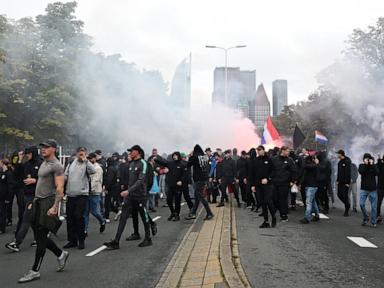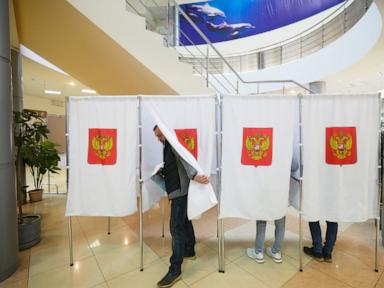
The detention and subsequent medical collapse of an opposition election observer at a Russian polling station represents not an isolated policing failure, but the predictable friction point where independent verification meets managed electoral outcomes. When opposition parties deploy accredited monitors to document ballot casting and tabulation, state security apparatuses execute a calculated trade-off: absorbing the reputational cost of visible coercion to prevent the evidentiary verification of fraud.
The Structural Friction of Independent Observation
Electoral authoritarian regimes rely on the appearance of procedural legitimacy to maintain domestic stability and international standing. Holding elections provides a mechanism to demonstrate regime strength, co-opt elites, and gather localized intelligence on regional loyalty. Yet the core requirement of such systems—a predetermined or heavily managed outcome—is fundamentally incompatible with transparent, independent oversight.
Election observers operate as human sensors within this system. Their presence introduces three specific operational disruptions to managed polling environments:
- Evidentiary Documentation: Accredited monitors possess the legal standing to request access to voter rolls, inspect ballot boxes prior to opening, and remain physically present during the manual counting process. By recording discrepancies via video or official protocol complaints, they convert localized irregularities into verifiable data points.
- Deterrence Through Proximity: Polling station commissions, often composed of state employees such as teachers and municipal workers, face heightened psychological friction when executing fraudulent directives under direct, continuous observation.
- Chain-of-Custody Integrity: Monitors track the physical movement of ballots from the voting booth to the territorial election commission, limiting opportunities for ballot stuffing or protocol substitution during transit.
When these disruptions threaten the target vote margin in a contested precinct, local administrators trigger intervention protocols. Because election commission chairs rarely possess the physical authority to remove an accredited observer who refuses to yield, state security forces—typically the Ministry of Internal Affairs (MVD) or the National Guard (Rosgvardiya)—are summoned to resolve the administrative impasse through physical removal.
The Three-Stage Escalation Protocol
The physical neutralization of an election observer follows a standardized operational sequence designed to neutralize oversight while maintaining a veneer of legal compliance.
Stage 1: Administrative Pretext Generation
Before physical force is applied, polling station leadership establishes an administrative justification for removal. Under Russian electoral law, an observer can be removed only by a court decision or, in more recent legislative iterations, following a formal ruling by the election commission citing violations of public order or interference with the voting process.
Common pretexts include:
- Allegations of obstructing the work of commission members by standing too close to voting booths or tabulation tables.
- Disputes over the unauthorized filming of voter lists, framed as a violation of personal data protection laws.
- Claims that the observer is conducting illegal campaigning or agitating voters within the precinct perimeter.
The objective at this stage is not to win a legal argument, but to generate a formal paper trail—a commission decision—that transfers jurisdiction from electoral law to administrative policing.
Stage 2: Coercive Extraction
Once the commission issues an expulsion order, law enforcement officers assume operational control. If the observer contests the legality of the expulsion and refuses to vacate the premises voluntarily, officers escalate to physical extraction.
This phase introduces acute physiological risk. Law enforcement personnel trained in crowd control and riot suppression apply compliance holds, joint locks, or forceful dragging techniques within confined indoor spaces. Unlike street protests, where crowds allow for dynamic movement, polling stations are dense environments filled with desks, metal ballot boxes, and narrow corridors. Applying standard takedown maneuvers in these spaces concentrates kinetic force against hard edges and restricts the subject's posture.
Stage 3: Medical Crisis and Information Contention
When physical extraction results in a medical emergency—such as an observer losing consciousness due to syncope, trauma, or acute stress—the incident shifts from a localized procedural dispute to an information warfare event.
At this juncture, an evidentiary asymmetry emerges between the state and the opposition:
- Opposition Reporting: Political parties and independent monitoring networks rely on immediate, fragmented witness testimony, mobile phone footage recorded prior to confiscation, and ambulance dispatch logs. Their objective is rapid dissemination to establish accountability before the narrative is sealed.
- State Containment: Law enforcement controls the physical space, the detained individual, and the official medical and police reports. State responses typically attribute the loss of consciousness to pre-existing medical conditions, deliberate simulation by the detainee to provoke sympathy, or self-inflicted injury during active resistance to lawful police orders.
Without independent forensic access to the detainee or unedited CCTV footage from the polling station—which frequently experiences technical failures during contested intervals—external analysts must weigh competing claims based on institutional incentives rather than complete empirical records.
The Cost Function of Coercive Intervention
From a strategic perspective, deploying physical force against an accredited observer carries a quantifiable cost for the state apparatus. Decision-makers at the municipal and regional levels implicitly calculate a cost function before authorizing an arrest inside a polling station.
The primary variables in this calculation include:
- The Informational Penalty: Visible arrests generate media coverage, tarnishing the sanitized image of the election. In high-profile districts, this can galvanize local apathy into active protest or draw unwanted scrutiny from federal superiors who prefer quiet, seamless vote delivery.
- The Tabulation Dividend: Removing a persistent monitor eliminates the primary obstacle to adjusting precinct-level turnout and candidate vote shares. In tight races or precincts where regional governors face strict performance quotas, the value of controlling the final protocol outweighs the reputational damage of a localized police incident.
- Accountability Insulation: The willingness of police officers to apply aggressive force correlates directly with their expectation of impunity. When investigative committees systematically decline to open criminal cases against officers for excessive force during electoral operations, the personal cost to the arresting officer approaches zero, removing internal restraint mechanisms.
In systems where electoral outcomes are tied directly to the career survival of regional administrators, the tabulation dividend consistently overrides the informational penalty. The system is structurally incentivized to prioritize the numerical result over procedural optics.
Asymmetric Information and Verification Limits
Analyzing incidents of electoral coercion requires strict adherence to evidentiary standards. In the immediate aftermath of an arrest resulting in medical distress, several critical facts remain unverifiable to outside observers:
- Causal Mechanisms of Injury: While witness accounts from fellow observers or party representatives can confirm that an individual collapsed during an arrest, distinguishing between vasovagal syncope induced by extreme stress, positional asphyxia caused by restraint techniques, and blunt force trauma requires independent clinical evaluation.
- Threshold of Provocation: Determining whether an observer crossed established legal boundaries regarding filming or physical distance is rarely possible from short video clips, which often begin after the initial verbal confrontation has escalated.
- Command Origin: It is rarely clear whether a violent extraction was ordered centrally by regional political strategists targeting a specific opposition stronghold, or resulted from the improvised panic of a local precinct chair and poorly trained patrol officers.
Recognizing these analytical boundaries prevents the conflation of corroborated events—such as the physical presence of an ambulance and the detention of a named party monitor—with unverified causal claims regarding intent or specific medical diagnoses.
Operational Countermeasures for Observation Networks
To mitigate the physical and evidentiary losses associated with coercive removals, election monitoring organizations must restructure their deployment protocols. Relying on lone observers to physically hold ground against armed state personnel is an asymmetric engagement that guarantees both human injury and data loss.
Redundant Multi-Tiered Deployment
Observation networks should abandon single-observer assignments in high-risk precincts in favor of synchronized teams. While one accredited monitor remains inside the polling station to maintain legal standing and observe the ballot box, a secondary team operates outside the perimeter to document police arrivals, ambulance dispatches, and the chain of custody during transport.
Automated Cloud Offloading
Physical devices—smartphones and portable cameras—are primary targets for confiscation during an arrest. Monitors must utilize applications configured for real-time, encrypted cloud streaming rather than local storage. If a device is seized or destroyed during an extraction, the evidentiary record of the confrontation remains intact and accessible to central legal teams.
Protocol-Based De-escalation
Monitors require rigorous pre-deployment training focused on legal boundaries and physical de-escalation. When confronted with an unlawful expulsion order backed by police presence, physically resisting extraction yields no tactical advantage; it merely provides law enforcement with the legal pretext of "resisting arrest" and exposes the monitor to physical trauma. The optimal tactical play is immediate compliance paired with continuous, passive audio-visual documentation of the officers' badge numbers, the commission's written expulsion order, and the exact timestamp of removal—converting the state's coercive act into an indisputable legal record for post-election litigation and international documentation.