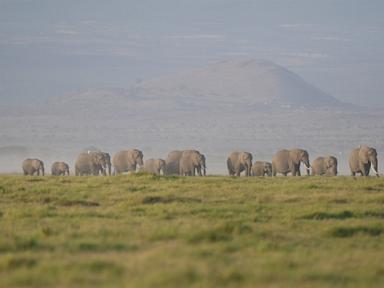
Fifteen elephant carcasses discovered across the Kimana Sanctuary and Kuku Ranch zones of the Amboseli ecosystem over a single month expose structural vulnerabilities in wildlife corridor management and veterinary toxicology tracking. The mortality event centers on a demographic anomaly: ten of the subjects displayed acute partial paralysis before expiring within a 48-hour window, while the remaining five suffered heavy scavenger degradation. Predominantly comprising breeding females and dependent calves with a single male outlier, this clustering points not to stochastic natural attrition, but to a concentrated point-source vector operating within community-managed buffer zones outside the core national park boundary.
The Diagnostic Vector Matrix
Determining the etiology of multi-organ failure in megafauna requires isolating clinical presentations against environmental variables. The observed presentation of localized motor dysfunction preceding rapid mortality narrows the diagnostic field into three discrete physiological pathways: neurotoxic chemical agents, biotoxins from cyanobacterial blooms in shared water points, or acute neurodegenerative pathogens.
- Exogenous Chemical Contamination: Incursion of agricultural pesticides or targeted retaliatory poisons utilized in local agro-pastoralist disputes. Organophosphates and carbamates inhibit acetylcholinesterase, leading to rapid neuromuscular blockade, respiratory arrest, and paralysis.
- Endogenous Biotoxicosis: Ingestion of cyanotoxins, specifically microcystins or anatoxins proliferating in stagnant water pans during dry spells. Anatoxin-a acts as a potent neuromuscular blocking agent, mimicking the rapid paralytic timeline observed in the ten clinical cases.
- Pathological Infection: Clostridial neurotoxins, such as those responsible for botulism or tetanus, which produce descending symmetrical paralysis. However, the multi-individual simultaneous presentation makes an infectious epizootic with a two-day fatal velocity statistically less probable than a shared ingestion event.
Preliminary assays conducted by the University of Nairobi identified a potential toxic substance in tissue samples, yet concurrent screens by the Government Chemist returned negative markers for standard panels. This analytical divergence highlights a critical friction point in wildlife forensics: standard screening protocols are optimized for known agricultural poisons, leaving novel or compound-synthesized toxins undetected until gas chromatography-mass spectrometry libraries are expanded for specific regional profiles.
The Spatial Risk Architecture
The spatial distribution of the mortalities—occurring entirely outside the protected perimeter of Amboseli National Park within community ranches—demonstrates the vulnerability of buffer zone conservation. Wildlife corridors such as Kimana and Kuku function as high-traffic transit matrices where megafauna overlap directly with expanding human infrastructure, livestock grazing, and small-scale agriculture.
When migration pathways intersect with human-dominated landscapes, the cost function shifts heavily against the wildlife. Elephants operate under strict home-range memory, returning to historical waterholes and foraging sites regardless of land-use conversion. If a water pan is contaminated by agricultural runoff or illicit agrochemical disposal, an entire matriarchal family unit drinking from the same source absorbs the toxic load simultaneously. This explains the demographic profile of the Amboseli loss: matrilineal herds feed and drink as synchronized units, translating a single point of contamination into a multi-generational mortality event.
The Forensic Bottleneck
Wildlife mortality investigations in developing conservation zones face operational friction across three distinct phases: sample integrity, transport logistics, and analytical latency.
[Field Discovery] -> (Scavenger Degradation / Decomposition) -> [Sample Collection] -> (Chain of Custody Lags) -> [Toxicology Screening]
When carcasses are discovered days after expiration—as occurred with five of the Amboseli subjects—tissue autolysis and scavenger consumption compromise diagnostic yields. Soft tissues degrade rapidly under equatorial temperatures, altering chemical concentrations and destroying histological architecture.
Furthermore, cold-chain transport of biological samples from remote community ranches to centralized laboratories in Nairobi introduces potential degradation variables. Even when samples arrive intact, jurisdictional divisions between specialized university laboratories, government chemists, and wildlife authorities create administrative friction that delays containment strategies. If the source is an active environmental contaminant or a localized baiting campaign, every day of analytical lag increases the probability of secondary poisoning across carnivore populations feeding on the carcasses, as well as risks to local pastoralist livestock utilizing the same hydrological networks.
Strategic Interventions for Ecosystem Stabilization
Mitigating recurrence requires a transition from reactive necropsy protocols to predictive surveillance architecture.
- Deploy Real-Time Hydrological Sensors: Install field-test kits and automated biosensors at high-risk water pans across community ranches to screen for common agricultural toxins and heavy metal spikes before consumption occurs.
- Restructure Corridor Buffer Governance: Formalize co-management agreements with local landowners on Kuku Ranch and Kimana Sanctuary to monitor agrochemical storage and restrict unmonitored chemical runoff near natural drainage lines.
- Standardize Forensic Toxicology Panels: Expand regional laboratory capabilities to screen for non-standard neurotoxins, synthetic rodenticides, and plant-derived alkaloids native to the East African rangelands, closing the diagnostic gap between preliminary findings and definitive identification.