The air around the stadium didn't just carry the scent of rain and fried onions; it carried the heavy, electric hum of a collective nervous breakdown. To be a supporter of Tottenham Hotspur is to live in a permanent state of emotional vertigo. One moment, you are standing on the peak of a mountain, lungs filled with the crisp air of possibility. The next, the ground vanishes. You are falling. You have been falling for years.
Watch the man in the third row of the West Stand. Let’s call him Arthur. He has held this season ticket since the days when the grass was more mud than green, and the shirts felt like heavy wool against the skin. His hands are buried deep in his coat pockets, gripping a set of keys so tightly his knuckles have turned the color of chalk. He isn't just watching a football match. He is watching his pulse rate dictated by twenty-two men who have never met him. For a different view, check out: this related article.
When the first goal went in—a chaotic, scrappy thing that shouldn't have happened—Arthur didn't just cheer. He exploded. It was a primal release, the kind of sound that comes from the gut rather than the throat. For three minutes, the table didn't matter. The looming financial reports didn't matter. The mocking chants from the away end were silenced. This is the "wild celebration" the headlines talk about, but they miss the texture of it. It is the desperate joy of a man who has been underwater for too long and has finally found a straw of air.
Then, the clock began its slow, cruel march. Further reporting on the subject has been shared by Bleacher Report.
Football is measured in minutes, but for a team on the brink, it is measured in heartbeats. The strategy was clear, or at least it was supposed to be. High lines, aggressive pressing, a commitment to a brand of "brave" football that looks beautiful on a tactical whiteboard but feels like a suicide pact when the legs start to tire. The manager stood on the touchline, a silhouette of stubborn conviction. He didn't move. He didn't flinch. He watched his philosophy collide with the brutal reality of an elite opponent that smelled blood.
The shift happened quietly at first. A misplaced pass. A heavy touch. A moment where a defender looked at the space behind him and saw a canyon.
Consider the "invisible stakes" of a Champions League spot. To the boardroom, it is a spreadsheet. It is a matter of £50 million, broadcast rights, and the ability to attract a certain tier of talent from the European continent. But to the fans, it is about relevance. It is the difference between sitting at the grown-ups' table and being relegated to the kitchen with the leftovers. When that dream begins to slip, it doesn't feel like a fiscal loss. It feels like an identity crisis.
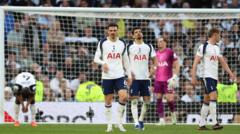
The equalizer didn't just level the score; it broke the spell. You could see the physical transformation in the players. Shoulders that were squared five minutes ago began to slump. Heads drifted downward, staring at the turf as if searching for an answer written in the blades of grass. This is where the tears begin to form, long before they actually fall. It is the realization that the effort, the sprinting, the lung-bursting recovery runs—all of it—might still result in nothing.
Time is a predator. When you are winning, it flies. When you are chasing a ghost, it drags its feet, mocking you with every tick of the scoreboard.
Arthur stopped shouting. He just watched. He has seen this movie before. He knows the ending, yet he remains in his seat, a captive audience to his own heartbreak. The "time running out" narrative isn't about the ninety minutes on the pitch; it’s about a window of opportunity for a generation of players. Every season that ends in a "nearly" or a "not quite" is a year stolen from the peak of a career. It is a legacy being sanded down into a cautionary tale.
The opposition moved with a terrifying, rhythmic efficiency. They didn't need to be lucky; they just needed to be patient. They waited for the inevitable crack in the Spurs' resolve. When it came, it wasn't a roar. It was a sigh. A lapse in concentration at the back, a clinical finish, and the stadium turned into a cathedral of stunned silence.
The contrast is what kills you. The memory of the wild, uninhibited joy from the first half makes the current misery sharper. It is a jagged edge. Some fans began to head for the exits, not because they don't care, but because they care too much to watch the final rites. They walk into the cold London night, shoulders hunched, already rehearsing the excuses they will give their colleagues on Monday morning.
But the real tragedy isn't the loss itself. It is the hope.
Hope is a dangerous thing to carry into a stadium like this. It is a weight. Without hope, a loss is just a statistic. With it, a loss is a betrayal. The players collapsed onto the pitch at the final whistle, some covering their faces, others staring into the middle distance. They looked like men who had just survived a shipwreck only to realize they were still miles from shore.
The manager’s post-match comments will talk about "process" and "learning." They will use words that try to sanitize the emotional wreckage. They will speak of mathematical possibilities and the need to stay focused on the next game. But mathematics cannot account for the lump in Arthur’s throat as he folds his program and slips it into his pocket. It cannot calculate the specific weight of a tear that stays trapped in the corner of an eye.
The lights of the stadium stayed on long after the pitch was empty. They cast long, distorted shadows across the seats. The "verge of tears" isn't a metaphor. It is a physical location. It is the place where a community goes to mourn a dream that was almost within reach, only to be yanked away by the cold, indifferent hand of the clock.
Tomorrow, the pundits will analyze the heat maps. They will argue about substitutions and xG and the merits of a high defensive line. They will treat it like a chess match. But for those who were there, it wasn't a game. It was an extraction. Something was taken from them—a piece of belief, a fragment of certainty—and replaced with the familiar, dull ache of wondering if it will ever actually be their turn.
Arthur walked toward the station, his keys still gripped in his hand. He didn't look at the league table on his phone. He didn't need to. He knew exactly where he was. He was in the rain, in the dark, waiting for a season that refused to love him back.