The lights in the situational briefing room do not hum, but they possess a heavy, synthetic silence that feels exactly the same. Air conditioning pushes a sterile chill against the back of your neck. On the glass displays, glowing vectors map out coordinates half a world away, tracking assets that cost billions of dollars and a lifetime of human training to position.
When a commander-in-chief looks at those screens, they do not just see data. They are looking at the terrifyingly short distance between a political statement and a kinetic reality.
A single directive can change everything. Yet, the public discussion surrounding the potential initiation of a conflict often misses the mechanics of how that power is wielded, questioned, and perceived. We treat military strategy as a series of inevitable chess moves. It is not. It is a fragile chain of human communication, prone to skepticism even at the absolute highest levels of authority.
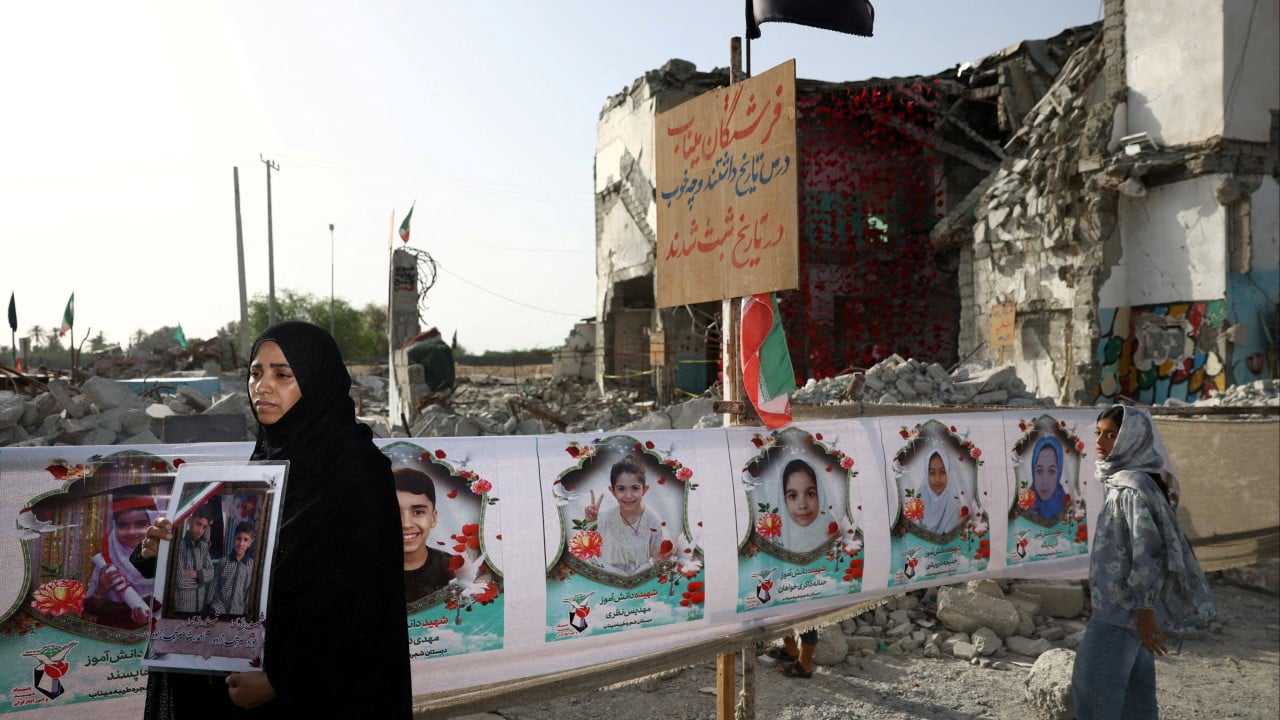
When Donald Trump publicly cast doubt on the notion that the United States would strike an Iranian school on the very first day of a hypothetical conflict, he pulled back the curtain on a deeply uncomfortable truth about modern warfare. It was a moment that challenged the conventional script of geopolitical posturing. Usually, leaders project absolute certainty. They want the adversary to believe every option, no matter how catastrophic, is firmly on the table.
By openly questioning the tactical validity or likelihood of such an extreme scenario, a different kind of signal was sent. It was an acknowledgment that even within the brutal math of a war plan, boundaries exist. Or, at least, boundaries should exist.
Consider the perspective of a mid-level intelligence analyst sitting in a windowless room, compiling target folders. They weigh necessity against collateral damage every hour of their shift. They use formulas to predict how many civilians might be harmed by a specific blast radius. They know that a school is not just a building; it is a geopolitical landmine. Striking such a target on day one violates the unwritten rules of modern military escalation. It shatters international legitimacy before the first diplomatic cables can even be processed.
Skepticism from the top down changes the psychology of the entire apparatus.
When a leader expresses doubt about an aggressive military scenario, it ripples through the Pentagon. Planners begin to re-examine their assumptions. Advisors recalibrate what they believe the executive appetite for risk truly is. It forces a collision between the theoretical violence of a war plan and the political reality of its consequences.
The public often views these back-and-forth statements as mere political theater, a chess match played out through press conferences and leaked memos. But for the people who have to execute those orders, the stakes are concrete. A line drawn or erased in a public speech alters the calculus of deterrence. It tells the adversary what you believe is unthinkable.
But there is a secondary layer to this skepticism. It introduces an element of unpredictability. When the command structure itself publicly debates what is likely or unlikely on day one of a war, it leaves both allies and adversaries guessing. Is the doubt a genuine sign of restraint, or is it a calculated attempt to make the opposition lower their guard?
This ambiguity is where the real danger lives. Miscalculation happens when one side misinterprets a leader's doubt as a lack of resolve. History is filled with conflicts that began because one nation believed another would never cross a specific line, only to watch that line disappear in the smoke of an opening salvo.
The true weight of military authority does not lie in the capacity to destroy. It lies in the agonizing responsibility of deciding what to spare. When the highest levels of power begin to openly debate the specific targets of a war's first hours, the abstract concepts of geopolitics dissolve. We are left looking at the raw, volatile mechanism of human decision-making, where a single word of doubt can hold back a disaster, or inadvertently invite one.