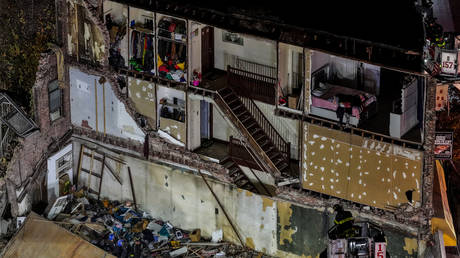
When emergency crews pull survivors from pancaked concrete in New York City, the headlines inevitably focus on the immediate heroics and the tragic toll of a deadly building collapse. Yet the real story rarely starts with the sudden roar of failing steel or crumbling masonry. It begins years earlier in filing cabinets, deferred maintenance logs, and the quiet erosion of municipal oversight. Right now, rescue operations dominate the news cycle, with heavy machinery, canine units, and structural engineers working around the clock to locate trapped victims amid unstable debris. Beneath the dust and sirens, however, lies a recurring systemic failure that plagues aging urban infrastructure across the five boroughs.
To understand how a structure simply gives way in one of the most heavily regulated real estate markets on earth, you have to look past the breaking news footage. You have to examine the mechanics of structural failure, the economics of aging commercial and residential stock, and the chronic bottlenecks within the city's inspection apparatus. Recently making headlines in this space: Why a Routine Day Off at Finland's Embassy in Australia Broke the Internet.
The Physics of a Sudden Failure
Buildings do not fall without warning. Even when a collapse appears instantaneous to witnesses on the street, the physical degradation has usually been compounding for months or decades. In New York, where much of the building stock dates back to the early twentieth century or the post-war boom, structures rely on load-bearing masonry, cast-iron columns, or early reinforced concrete.
Progressive collapse is the primary culprit when a localized failure turns into a total catastrophe. This happens when a primary structural element—such as a main support column, a transfer girder, or a load-bearing wall—fails, transferring its weight to adjacent components. If those neighboring elements were not designed to carry the sudden surge in stress, they buckle in a chain reaction. Gravity takes over, and upper floors pancake onto lower levels with kinetic energy that exceeds the design limits of the foundation. Additional information into this topic are covered by TIME.
Several triggers typically initiate this chain reaction:
- Unpermitted structural alterations: Contractors removing load-bearing walls during interior renovations without installing proper temporary shoring or permanent steel headers.
- Foundation undermining: Deep excavation on an adjacent lot that shifts the water table or disturbs the soil bearing capacity beneath an older neighbor.
- Chronic water infiltration: Moisture seeping through cracked facades or compromised roofs, rusting internal steel rebar until it expands and spalls the surrounding concrete.
- Overloading: Storing heavy materials, machinery, or excessive construction debris on floor plates engineered only for standard residential or light commercial loads.
Consider a hypothetical example of an older five-story brick walk-up undergoing a ground-floor retail conversion. If a crew cuts into a masonry pier to widen a storefront window without calculating the dead load—the permanent weight of the building itself—and the live load—the shifting weight of occupants and furniture—the upper stories lose their vertical path to the ground. The brickwork above develops diagonal shear cracks. Within hours or days, the entire front elevation can peel away into the street.
Inside the Rescue Operation
Once a structure comes down, the operational environment shifts from urban firefighting to specialized technical rescue. The Fire Department of New York (FDNY) deploys elite Urban Search and Rescue (USAR) units, alongside structural engineers from the Department of Buildings (DOB), to stabilize the site before a single heavy beam is lifted.
Time is the enemy. Yet moving too fast kills both victims and rescuers.
A collapse pile is a pressurized web of tension and compression. Lifting a slab of concrete with a crane can inadvertently release tension on a steel beam pinning a void space, causing secondary collapses that crush survivors waiting beneath. Rescue teams rely on cribbing—stacking heavy timber blocks in box-like configurations—and hydraulic shores to systematically lock debris in place as they tunnel inward.
Technological tools aid the search, though none replace physical persistence. Acoustic listening devices detect faint tapping or breathing through dense rubble. Fiber-optic snake cameras peer into crevices too narrow for human entry. Search dogs, trained to ignore the scent of rescuers and focus strictly on live human odor, map out high-probability zones across the debris field. Meanwhile, structural sensors monitor the remaining standing walls for millimeter-level shifts that signal an imminent secondary failure.
The Regulatory Blind Spot
New York City enforces some of the strictest building codes in North America, including Local Law 11—officially the Facade Inspection and Safety Program—which mandates regular exterior inspections for buildings taller than six stories. On paper, the city should be virtually immune to catastrophic structural failures.
In practice, enforcement relies heavily on self-certification and reactive complaint systems.
The Department of Buildings oversees more than one million structures across the five boroughs. Inspecting every active construction site, facade repair, and aging foundation simultaneously is physically impossible with current staffing levels. Instead, the system leans on professional certification, allowing licensed architects and engineers to sign off on their own plans and inspections to expedite permits. While this keeps development moving, it creates an inherent conflict of interest when unscrupulous owners pressure professionals to overlook structural compromises to save money.
Furthermore, the city's 311 complaint system acts as an early warning network that frequently goes unheeded until it is too late. Tenants and neighbors routinely report bowing walls, cracking plaster, and violent vibrations from nearby demolition work. Inspectors respond, often issuing violations and stop-work orders. Yet bad actors frequently treat fines as a minor cost of doing business, ignoring stop-work orders and continuing illegal work behind boarded-up windows and plywood fences.
The Economics of Deferred Maintenance
Behind almost every non-weather-related structural failure sits a financial calculation. Maintaining aging infrastructure in New York is extraordinarily expensive. Union labor rates, sidewalk shed rentals, engineering fees, and material costs turn routine structural remediation into multi-million-dollar capital projects.
When property owners face tightening credit markets, rising interest rates, or capped revenue streams, maintenance is the first line item cut from the budget.
Roof membranes go unpatched. Parapet walls are left to weather freeze-thaw cycles that widen hairline fractures into structural splits. Parking garages—notoriously vulnerable to road salt carried in by vehicles during winter months—suffer slow, invisible corrosion of their post-tensioned cables and rebar grids. In many commercial and residential buildings, owners opt for cosmetic patches over deep structural rehabilitation, applying fresh stucco or paint over crumbling masonry to satisfy cursory visual checks.
This financial squeeze intensifies during ownership transitions. Speculative buyers acquiring distressed properties often stretch their capital thin just to close the deal, leaving zero reserves for immediate structural stabilization. When they rush to renovate and flip the asset, safety protocols and engineering reviews become inconvenient obstacles.
Historical Echoes and Unlearned Lessons
The current tragedy joins a grim timeline of preventable structural failures in the city. Each disaster sparked outrage, emergency hearings at City Hall, and promises of sweeping reform.
In 2014, a gas explosion leveled two buildings in East Harlem, killing eight people and exposing aging utility infrastructure beneath city streets. In 2015, an illegal gas hookup triggered a blast in the East Village that claimed two lives and reduced three buildings to rubble. More recently, the 2023 collapse of a multi-story parking garage in Lower Manhattan killed a worker and injured several others, highlighting the dangers of unchecked rooftop vehicle storage on aging concrete slabs.
Every investigation yielded a predictable post-mortem:
- Warning signs were documented months or years prior to the collapse.
- Violations sat open in municipal databases without physical enforcement or building vacates.
- Communication gaps prevented data from one agency—such as utility providers or sanitation crews—from flagging structural hazards to building inspectors.
Following the Lower Manhattan garage collapse, city officials pledged stricter enforcement of overdue structural inspections and increased penalties for property owners who ignore critical safety repairs. Yet systemic change moves far slower than gravity. Thousands of buildings across New York currently carry open Class 1 "immediately hazardous" violations, many involving compromised facades, defective fire escapes, or unstable structural elements.
What Happens When the Dust Settles
Once the final victim is recovered and the debris is hauled to an off-site forensic facility, the investigation shifts from emergency response to civil and criminal accountability. Forensic structural engineers will catalog every steel beam, concrete core, and mortar sample to pinpoint the exact failure sequence.
District attorneys and the Department of Investigation will subpoena permit applications, emails between contractors and owners, and inspection logs. If the evidence shows that an owner or contractor knowingly bypassed safety regulations or falsified engineering reports, criminal charges—ranging from reckless endangerment to manslaughter—can follow.
For surrounding residents and business owners, the fallout lasts for years. Adjacent buildings often suffer foundation shifts or structural battering during a collapse, forcing families into temporary housing while insurance companies and attorneys litigate liability. Small businesses lose foot traffic behind miles of emergency fencing and scaffolding.
Real accountability requires stripping away the ability for negligent owners to hide behind shell LLCs and paper-thin corporate shields. Until municipal agencies gain the staffing and legal authority to physically halt unsafe work immediately—and seize assets when owners abandon structural maintenance—emergency responders will keep getting called to pull survivors from the wreckage of buildings that never should have fallen.


