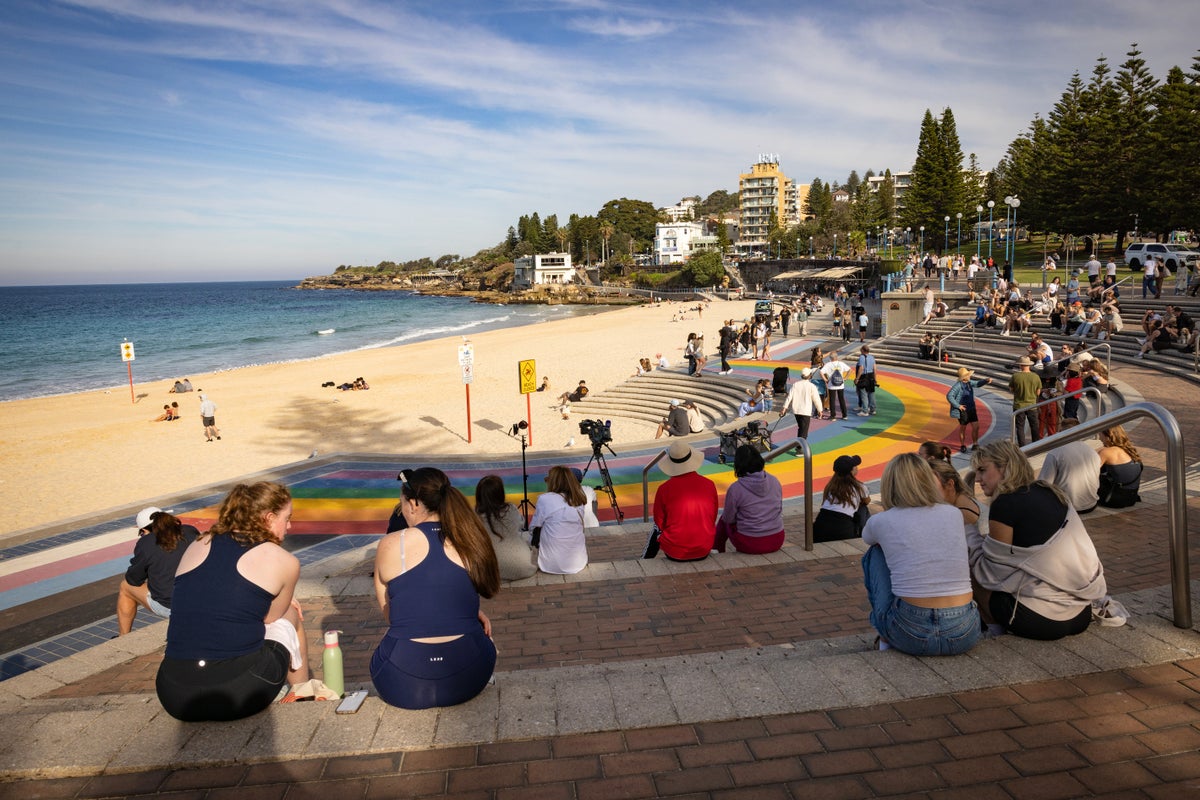
The failure of public safety systems at the intersection of urban infrastructure and natural environments is rarely a failure of technology. It is a failure of regulatory optimization. The critical injury of a 35-year-old swimmer at Sydney’s Coogee Beach, occurring a mere 30 meters from the shoreline, exposes a systemic structural bottleneck: the irreconcilable conflict between commercial aviation safety protocols and immediate marine risk mitigation.
When the Civil Aviation Safety Authority (CASA) enforced a drone ban over Coogee Beach due to its location within the flight path of Sydney Kingsford Smith Airport, it prioritized the elimination of low-probability, catastrophic airspace collisions over the management of high-probability, high-consequence marine apex predator interactions. The emergency lifting of this ban by the New South Wales (NSW) government demonstrates that regulatory frameworks are frequently reactive, adapting only after a system failure occurs. To evaluate how to prevent future blind spots, we must deconstruct the operational variables governing coastal surveillance, airspace friction, and the mathematical reality of shark mitigation technologies.
The Tri-Layered Matrix of Coastal Protection
Relying on a single mechanism for marine safety creates a binary point of failure. Modern, data-driven coastal protection requires a tri-layered matrix consisting of exclusion, interception, and surveillance. Each layer possesses distinct cost functions, operational constraints, and failure modes.
+-----------------------------------------------------------------+
|                    THE TRI-LAYERED MATRIX                       |
+-----------------------------------------------------------------+
|  1. EXCLUSION LAYER (Physical/Seasonal Barriers)                |
|     - Max Protection vs. Environmental Degradation & Bycatch    |
+-----------------------------------------------------------------+
|  2. INTERCEPTION LAYER (SMART Drumlines & Listening Stations)   |
|     - Active Removal/Tagging vs. Non-Tagged Blind Spots        |
+-----------------------------------------------------------------+
|  3. SURVEILLANCE LAYER (Unmanned Aerial Systems / Drones)       |
|     - Real-Time Tracking vs. Regulatory Airspace Friction       |
+-----------------------------------------------------------------+
The Exclusion Layer
Traditional shark nets act as a physical and psychological barrier. However, their deployment introduces a severe seasonal vulnerability. In NSW, these nets are removed during the winter months to prevent the entanglement and mortality of migrating cetaceans. The Coogee incident occurred during this seasonal gap, leaving the beach entirely reliant on subsequent layers of defense. The removal of the exclusion layer shifts the entire burden of safety onto active intervention strategies.
The Interception Layer
With nets absent, mitigation relies on SMART (Shark Management Alert in Real-Time) drumlines and acoustic listening stations. This infrastructure relies on the physical interception of predators. Since January 2026, NSW Department of Primary Industries data reveals that 61 great white sharks have been captured on SMART drumlines across the region.
The structural flaw in this layer is its dependence on pre-existing data or active feeding behaviors. Acoustic listening stations only trigger alerts if a shark has been previously captured, fitted with an internal or external acoustic tag, and swims within a 500-meter radius of the receiver. The 3.5-meter great white shark implicated in the Coogee attack was untagged. This rendered the entire digital interception network obsolete, creating a complete data blackout.
The Surveillance Layer
Unmanned Aerial Systems (UAS), or drones, serve as the real-time optical verification layer. Operated by Surf Life Saving NSW, these platforms bridge the gap left by missing nets and untagged predators. Unlike passive listening stations, a drone relies on direct line-of-sight computer or human vision, transforming the safety paradigm from passive alerting to active tracking.
The Airspace Friction Bottleneck
The primary breakdown at Coogee Beach was not a lack of resources, equipment, or trained personnel. Surf Life Saving NSW possesses an operational fleet of over 300 drones and 400 certified pilots. The system stalled entirely due to geographic and institutional friction.
Coogee Beach sits inside the Controlled Airspace (CTA) cylinder of Sydney Kingsford Smith Airport, a high-density international aviation hub. Under standard CASA regulations, commercial and recreational drone operations within 5.5 kilometers of an airport terminal are heavily restricted or outright banned to prevent Remotely Piloted Aircraft Systems (RPAS) from interfering with manned aircraft executing approach or departure profiles.
This spatial overlap creates an operational paradox. While commercial aircraft rarely descend to altitudes that intersect with drone surveillance corridors (typically 30 to 50 meters above sea level for shark spotting), the regulatory framework treats the risk as uniform. The cost function of this regulation is asymmetric:
$$C_{\text{aviation}} = P_{\text{collision}} \times L_{\text{catastrophic}}$$
$$C_{\text{marine}} = P_{\text{attack}} \times L_{\text{individual}}$$
Because the perceived political and human cost of an aviation incident ($C_{\text{aviation}}$) outweighs the localized cost of a marine attack ($C_{\text{marine}}$), the regulatory default is absolute suppression of the lower-altitude airspace. This institutional risk aversion directly generated the surveillance blind spot that left lifesavers blind to the approaching 3.5-metre predator.
Quantifying Detection: Human Vision vs. Automated Surveillance
The temporary lifting of the CASA ban introduces immediate operational challenges regarding how data is captured and acted upon. Aerial surveillance is heavily constrained by environmental physics, specifically Snell’s Law, water turbidity, and pilot cognitive fatigue.
                       [ Drone Camera ]
                             |
                             |  Incident Light
                             v
~~~~~~~~~~~~~~~~~~~~~~ Surface Interface ~~~~~~~~~~~~~~~~~~~~~~
                      /      |      \
                     /       |       \
       Refracted    /        |        \   Scattered
       Light       /         |         \  Light
                  v          v          v
                       [ Target Shark ]
When a drone monitors the ocean, the probability of detecting a target ($P_d$) is a function of multiple environmental and technical variables:
$$P_d = f(V, T, \theta, H)$$
Where:
- $V$ is the ambient water visibility (turbidity).
- $T$ is the sea surface state (Beaufort scale / chop).
- $\theta$ is the sun angle, dictating glare and surface reflection.
- $H$ is the altitude of the aircraft, governing the field of view versus pixel density.
Historical data from the Queensland SharkSmart drone trials across 10 major beaches provides a baseline for understanding these mechanics. Between September 2020 and April 2024, pilots conducted 17,954 drone flights. Sharks were sighted in only 3.8% of those flights, yielding 676 distinct sighting events. Out of these hundreds of sightings, water evacuations were triggered only 39 times.
This data indicates a low conversion rate between raw presence and actionable threat levels, illustrating two critical operational realities:
- Sharks frequently coexist with swimmers without initiating aggressive behavior.
- Human operators suffer from rapid cognitive decline when scanning uniform, high-glare marine environments for extended periods.
To counter human limitations, testing has pivoted toward computer vision and machine learning models trained to identify carcharhinid silhouettes. However, these computer vision solutions are not yet mature enough for standalone deployment. Current computer vision engines exhibit high false-positive rates when encountering marine megafauna like stingrays, fur seals, or large schools of baitfish. They also suffer from severe false-negative rates when sea surface chop distorts the target's physical geometry. Consequently, the technology remains a decision-support tool rather than an autonomous safety net.
The Logistics of the Code X Emergency Protocol
When a threat breaches the perimeter, the latency between detection and extraction dictates the survival rate of the target population. The rescue at Coogee Beach highlights the friction within the human-in-the-loop lifecycle.
An off-duty lifeguard on a paddleboard identified the hazard and signaled a "Code X"—the universal lifesaver protocol for an active, immediate shark emergency. The timeline of an emergency response can be modeled as a sequence of discrete latency intervals:
$$\Delta T_{\text{total}} = \Delta T_{\text{detection}} + \Delta T_{\text{communication}} + \Delta T_{\text{interdiction}} + \Delta T_{\text{extraction}}$$
At Coogee, $\Delta T_{\text{detection}}$ was delayed by the absence of aerial surveillance. $\Delta T_{\text{communication}}$ relied on manual hand signals from a wave-tossed paddleboard to the shore tower. $\Delta T_{\text{interdiction}}$ was compromised as the victim was briefly pulled underwater before the predator broke off the encounter, allowing for physical extraction.
The primary limitation of this legacy sequence is its linear nature. If any single interval experiences a bottleneck, the entire system fails. Drones optimize this timeline by compressing $\Delta T_{\text{detection}}$ and automating $\Delta T_{\text{communication}}$. A networked drone payload can broadcast real-time telemetry directly to an inflatable rescue boat (IRB) or a central command center, bypassing manual shore signals entirely.
Deploying an Integrated Airspace Exclusion Framework
To transform the temporary CASA exemption into a permanent, highly reliable safety framework, New South Wales must abandon ad-hoc emergency provisions in favor of a structured, geo-fenced airspace integration profile. The path forward requires a systematic approach to three specific operational maneuvers.
Establish a Permanent Low-Altitude UAV Corridor
CASA must formalize a Restricted Airspace Designation (RAD) specifically for public safety UAVs at urban beaches located within airport control zones. This corridor should be strictly bounded between 0 and 45 meters Above Ground Level (AGL). Because commercial passenger aircraft do not operate at 45 meters over Coogee Beach during standard flight profiles, this establishes absolute physical separation, reducing $P_{\text{collision}}$ to zero without halting commercial aviation.
Implement ADS-B Transponder Integration
All Surf Life Saving NSW drones operating within airport boundaries must be equipped with active Automatic Dependent Surveillance-Broadcast (ADS-B) Out transponders. This hardware ensures that the unmanned aircraft is completely visible to air traffic control (ATC) towers and commercial pilots in real time. It shifts the paradigm from blind segregation to cooperative airspace integration.
Enforce Environmental Trigger Matrices
Because drone surveillance efficiency degrades under poor environmental conditions, flight profiles must be dictated by a strict operational matrix. If water turbidity drops below a verified threshold or sea state exceeds Beaufort Scale 4, drone assets should be grounded, and resources automatically diverted to increasing the density of SMART drumlines. This ensures that economic and operational resources are never wasted on low-probability detection environments.
The NSW government’s statement that "nothing is off the table"—including controversial methods like culling—reflects a political urgency to manage public anxiety. However, culling is an unquantifiable strategy that degrades marine ecosystems without offering real-time protection against transient predators. The sustainable solution requires resolving regulatory friction, linking automated aerial observation with existing marine infrastructure, and accepting that absolute safety in an open marine environment is a mathematical impossibility. Authority figures must focus on optimizing risk mitigation variables rather than chasing the illusion of zero risk.