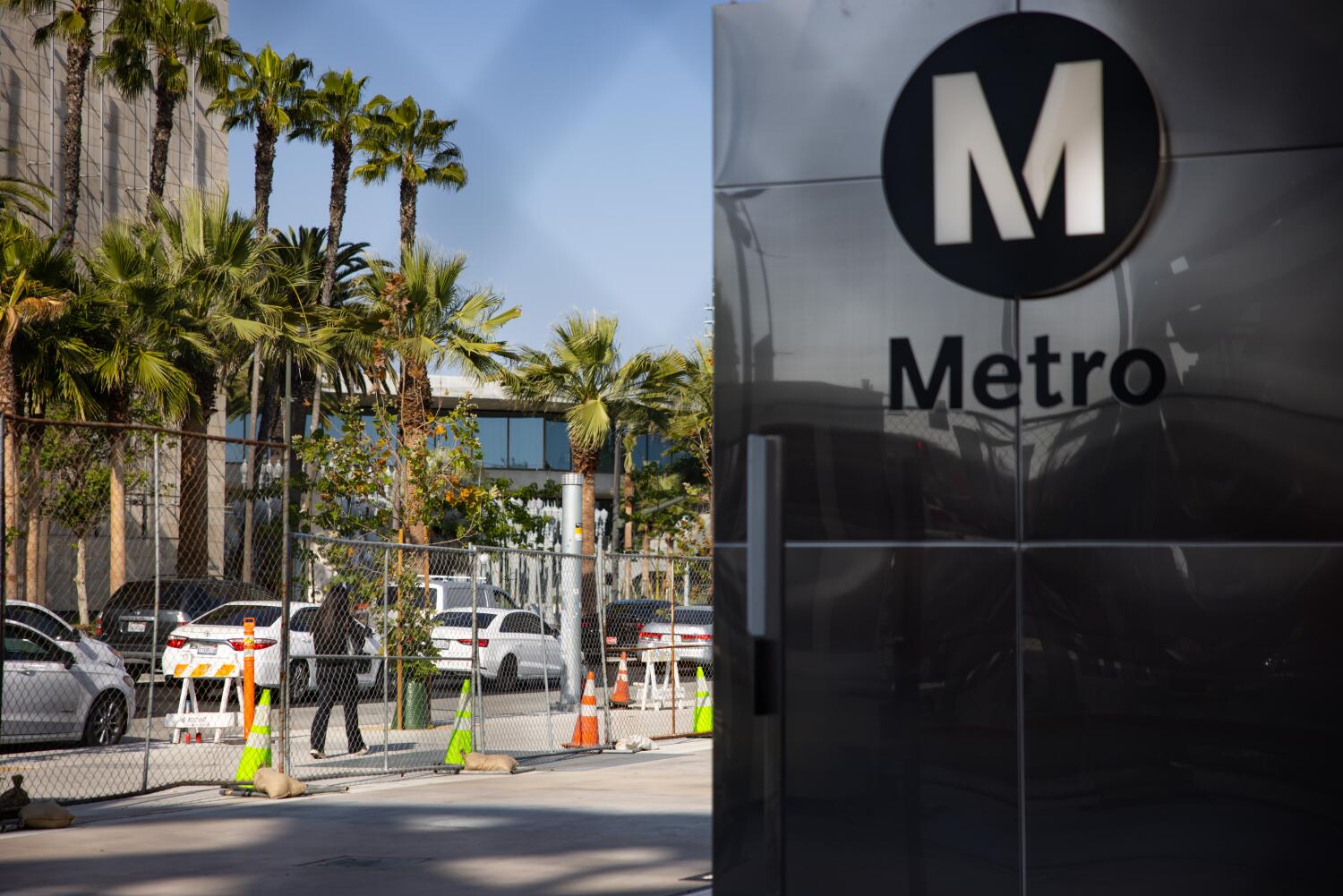
Los Angeles finally opened the first phase of the Metro D Line subway extension under Wilshire Boulevard. Three shiny new stations at La Brea, Fairfax, and La Cienega are now active. Commuters can zip underneath the legendary traffic of the Miracle Mile without touching a brake pedal.
It feels like a triumph. It is actually an indictment.
The original plans for a mass transit spine along Wilshire Boulevard were drawn up in the early 1980s. Some conceptual iterations even go back to 1961. It took nearly half a century of bureaucratic warfare, political posturing, and endless lawsuits to lay down just four miles of track. Four miles. In the time it took LA to build a fraction of a single subway line, China built entire high-speed rail networks spanning thousands of miles.
We have weaponized the planning process against our own infrastructure. If America expects to build functional cities for the next generation, we have to stop treating every major transit project like a 50-year negotiations seminar.
The Anatomy of an Infrastructure Standoff
The multi-decade delay of the Wilshire subway, historically known as the "Subway to the Sea," was not caused by engineering failures. The ground beneath LA is tricky, sure, but miners and tunnel-boring machines know how to handle dirt. The real blockage was human.
In 1985, a methane gas explosion occurred at a Ross Dress for Less store near Fairfax. No one died, but the incident became the perfect political weapon. Local homeowners who did not want the subway in their backyards found their champion in Congressman Henry Waxman. Citing the methane scare, Waxman successfully pushed through federal legislation that banned federal funding for tunneling along the Wilshire corridor.
That single political maneuver locked the project in ice for twenty years. It took until 2007 for Congress to finally lift the ban after independent scientific studies repeatedly proved that modern tunneling technology could safely mitigate the gas risk.
Then came the lawsuits.
When the project finally got back on track, the Beverly Hills Unified School District launched a massive legal campaign to stop Metro from tunneling underneath Beverly Hills High School. School officials claimed the tunnel posed safety risks and interfered with hypothetical plans for an underground garage. They spent millions of dollars of public bond money on lawsuits. Every single court ruled in favor of Metro, concluding that the transit agency had followed proper procedures and that the design avoided active earthquake faults.
The litigation achieved nothing but inflation. By the time the first segment opened, the budget had swelled to roughly $3.7 billion.
The Cost of Seeking Total Consensus
The fundamental flaw in American infrastructure planning is the belief that every project must achieve absolute consensus before a shovel hits the dirt. We have built an environmental and legal framework that gives disproportionate veto power to small, wealthy groups of objectors.
The National Environmental Policy Act (NEPA) and the California Environmental Quality Act (CEQA) were designed to protect the planet. Instead, they are frequently used as cudgels by NIMBY (Not In My Backyard) groups to stall projects until they become too expensive to build. An environmental impact report for a major rail line can take five to seven years and cost tens of millions of dollars. It results in thousands of pages of documentation that nobody reads, serving primarily as a legal target for opposition lawyers looking for procedural loopholes.
When you allow wealthy enclaves to dictate the terms of regional transit, everyone else pays the price. The D Line extension is designed to connect downtown LA to the Westside, eventually reaching UCLA and the VA Hospital in Westwood. This corridor connects major job centers, medical facilities, and universities. Delaying it for forty years forced hundreds of thousands of working-class commuters to spend hours trapped in gridlock on Wilshire Boulevard or the 10 Freeway every day.
How We Can Build Fast Again
We cannot afford to keep doing this. The final segments of the D Line to Century City and Westwood are rushing toward completion to meet the deadline for the 2028 Summer Olympics. The impending arrival of the world stage is forcing a level of urgency that should have existed decades ago.
If we want to replicate this speed without needing an international sporting event as a catalyst, the rules of the game must change.
First, we need to strip away the redundant layers of environmental review for transit projects. If a project is explicitly designed to reduce greenhouse gas emissions by moving people out of cars and onto electric trains, it should receive an automatic, fast-tracked exemption from lengthy state environmental challenges. It is absurd to use environmental laws to delay environmental solutions.
Second, the federal government needs to tie infrastructure funding to local zoning and permitting reform. If a municipality wants federal dollars for transit, they must lose the ability to block the alignment through local zoning boards or frivolous municipal lawsuits. Regional needs must supersede local anxieties.
Third, public agencies need to build in-house expertise. Right now, transit agencies rely almost entirely on an army of outside consultants and private contractors for every phase of design and construction. Because we build so infrequently, the institutional knowledge disappears between projects. When you do not know how to manage a project internally, private contractors run over budget and behind schedule with minimal accountability.
The opening of the first leg of the D Line is a massive win for transit riders in Los Angeles. But let's not pretend the timeline was acceptable. We need to look at the 46-year timeline of the Wilshire subway as a warning, not a blueprint. The next lines must be built in years, not generations. Turn on the boring machines, streamline the paperwork, and keep moving forward.