Amazon just dropped the hammer on the Australian energy market, and it’s not just another solar farm announcement. They’ve signed nine new renewable energy agreements across Victoria and New South Wales, pushing their total Australian capacity to nearly 1 gigawatt. If you’re trying to wrap your head around that scale, it’s enough juice to power over half a million homes.
But here’s what the headlines aren't telling you. This isn’t just a green PR stunt to offset their massive $20 billion data centre expansion. It's a calculated move to solve the "reliability" problem that has plagued the Australian grid for years. Out of these nine new deals, eight include battery storage. That’s a massive shift in strategy.
For the first time outside the United States, Amazon is going all-in on solar-battery hybrids and standalone storage. They aren't just buying power; they're buying the ability to keep the lights on when the sun goes down and the wind stops blowing.
The AI Power Problem Nobody Admits
Everyone talks about how AI will change the world, but nobody likes to talk about the electricity bill. Data centres in Australia currently suck up about 2% of the national grid’s energy. By 2030, experts expect that to triple to 6%. In New South Wales alone, the projection is even scarier—11% of the state’s total power could be going strictly to servers by the end of the decade.
Amazon Web Services (AWS) is at the heart of this. You can't run "Top Secret" government clouds or massive generative AI models on a grid that flickers. By backing these nine projects—which include the Golden Plains 2 wind farm and several solar-battery hybrids like the Muswellbrook project—Amazon is essentially building its own insurance policy.
They’re adding 430 megawatts (MW) of new capacity. This isn't just taking existing green energy from others; it's "additionality." They’re funding the construction of projects that wouldn't exist otherwise. This is vital because the Australian Energy Market Operator (AEMO) has been shouting from the rooftops about the need for more firming capacity—energy that can be dispatched on demand.
Where the Money is Going
If you look at the map of these new deals, you'll see a clear pattern. They’re clustering around the heavy industrial and population hubs.
- New South Wales: The Muswellbrook project is a standout. It’s sitting on old coal mining land, turning a brownfield site into a 94.5 MW solar hub with 70 MW of battery storage. It’s the ultimate metaphor for the energy transition.
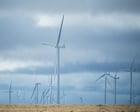
- Victoria: They’ve snagged a massive 201 MW chunk of the Golden Plains 2 wind farm. Once finished, this will be the largest wind farm in the Southern Hemisphere.
- The Battery "Bolt-on": In a clever move, they’re adding a 32 MW battery to the existing Mokoan Solar Farm. It’s like adding a power bank to a phone you already own.
I’ve seen plenty of companies claim they’re "100% renewable," but often they’re just buying cheap certificates from old wind farms. Amazon is doing the hard work of signing 15-year Power Purchase Agreements (PPAs). These contracts give developers the bankable certainty to actually break ground. Without Amazon’s signature, half of these projects would still be stuck in a spreadsheet.
The Real Cost of Doing Nothing
There’s a legitimate fear that big tech will drive up power prices for regular Australians. The Clean Energy Finance Corporation warned that if we don't build more generation fast, data centre demand could hike prices by over 20% in the next ten years.
Amazon’s counter-argument is that their investment stabilizes the market. By injecting billions into the grid—$2.8 billion since 2020, to be exact—they’re lowering the long-term cost of renewables for everyone. It’s a bold claim, and it only works if the infrastructure keeps up with the demand.
You also have to look at the water side of the equation. Data centres are thirsty. While this news is about electricity, AWS is also pushing for "water positivity" by 2030. In Australia, that means using treated wastewater for cooling instead of drinking water. It’s all part of the same puzzle: making massive industrial computing socially acceptable in a country prone to droughts and energy spikes.
Stop Thinking About Just Solar Panels
If you're a business leader or an investor, the takeaway here is that the era of "simple" renewables is over. Solar panels are a commodity now. The real value is in the storage and the "firming." Amazon isn't just the largest corporate buyer of renewable energy in Australia because they like the environment—they’re doing it because it's the only way to ensure their $20 billion infrastructure investment doesn't become a collection of very expensive paperweights.
The grid is changing faster than the regulators can keep up with. We're moving toward a system where 70% of data centre workloads will be AI-driven by 2030. Those chips don't sleep.
If you want to track where the Australian energy market is headed, stop looking at the solar farms and start looking at the batteries attached to them. That’s where the real power lies.
Check your own energy provider’s mix. If they aren't investing in storage at this scale, they’re going to get left behind by the likes of Amazon and Blackstone. The transition is happening, and it's being funded by the cloud.