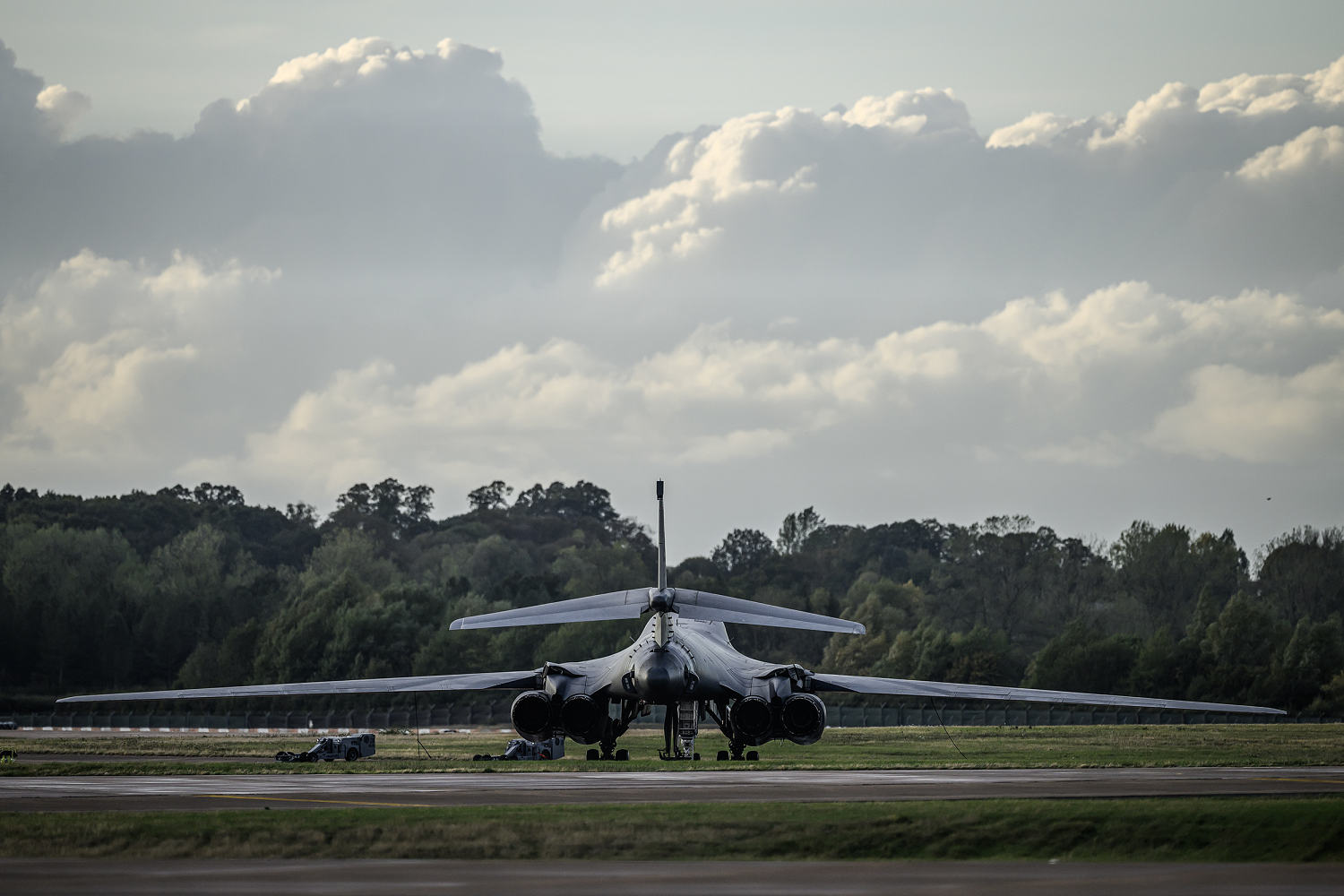
Military logistics don't shift overnight. When a major superpower pulls its most lethal strategic assets from a frontline allied base, everybody pays attention. Recent reports highlight a high-stakes security pivot at Royal Air Force Fairford in Gloucestershire, where U.S. Air Force heavy bombers were abruptly relocated amid credible threats. You don't move nuclear-capable platforms like B-52s or B-1s on a whim. The decision reflects a sobering reality about modern force protection, shifting intelligence assessments, and the vulnerability of overseas forward-operating locations in an era of asymmetric warfare.
Let us look past the official press releases and examine what this redeployment actually means for global defense posture.
The Security Calculus Behind the Fairford Withdrawal
Strategic air bases aren't just concrete runways and hangars. They are complex ecosystems packed with specialized maintenance equipment, secure communications infrastructure, and thousands of personnel. RAF Fairford has long served as a crucial staging post for U.S. strategic bombers operating in the European theater. It offers immediate access to the North Atlantic and Eastern Europe, making it an indispensable asset for NATO deterrence missions.
So why pull the planes out?
Intelligence agencies operate on probabilities and threat streams that rarely make the evening news. When specific chatter points toward potential sabotage, insider threats, or coordinated surveillance by hostile actors against high-value military assets, commanders face a binary choice. You either lock the base down to an unsustainable degree or you disperse your forces. Dispersal wins every single time. Military doctrine prioritizes survivability over convenience. If a bomber sits on a tarmac as an easy target, it is a liability. Moving it restores operational flexibility.
What Most People Get Wrong About Forward Deployments
Civilians often assume that moving aircraft means a permanent abandonment of a strategic region. That is rarely the case. Modern air power is built on agility and the agile combat employment concept. The U.S. military trains relentlessly on moving aircraft between distributed locations to complicate an adversary's targeting calculus.
If Fairford becomes temporarily too hot due to heightened security alerts, those bombers don't just disappear from the chessboard. They fly back to continental U.S. installations or disperse to secondary partner airfields where security perimeters are tighter or threat profiles are lower.
Think of it as a tactical retreat to preserve combat power. It is not a withdrawal of political commitment to NATO. It is a pragmatic adjustment to immediate risk. Hostile intelligence services and non-state actors constantly probe allied defenses, looking for soft spots in perimeter security, supply chains, or local contractor vetting processes. When a threat reaches a threshold where local countermeasures aren't enough to guarantee absolute asset protection, relocation is the only logical step.
The Broader Vulnerability of European Bases
We live in a security environment where traditional frontlines have dissolved. Sabotage operations, cyber intrusions into base logistics, and drone surveillance are cheap for adversaries to execute and expensive for defenders to counter.
For years, critics have pointed out that legacy military installations in Western Europe were
Why the US Air Force Suddenly Cleared Out Its British Bombers
news
When the United States Air Force quietly clears out every single strategic bomber from a major allied base, defense analysts pay attention. That is exactly what happened at Royal Air Force Fairford in Gloucestershire, England, following intelligence warnings about a suspected terrorist plot. You do not move multi-million-dollar nuclear-capable aircraft on a whim. The logistics are a nightmare, and the signaling is loud.
Military planners operate on risk management. When chatter spikes or specific threat vectors materialize regarding high-value assets stationed overseas, standard operating procedures shift from routine deterrence to immediate force protection. Fairford is not just any airfield. It serves as the primary European staging ground for B-52 Stratofortresses and B-1B Lancers participating in Bomber Task Force operations across Europe and the Middle East. Losing an asset like that to an asymmetric attack isn't just a tactical failure; it is a strategic disaster.
Let's look at what actually happened behind the scenes and why this relocation reveals a massive vulnerability in modern expeditionary air power.
The Strategic Value of RAF Fairford
RAF Fairford occupies a unique spot in NATO's defense infrastructure. Its long runways and specialized munitions storage facilities make it the premier forward operating location for US strategic bombers in Western Europe. Whenever tensions flare with Russia or operations ramp up in the Middle East, you can bet that a rotation of B-52s will touch down in Gloucestershire.
The base allows the US military to project power across multiple theaters without flying heavy bombers all the way from continental United States bases like Barksdale or Minot. Crews rotate in, run missions alongside European allies, and deter regional aggression. But convenience breeds vulnerability. A fixed base with a predictable footprint makes an inviting target for hostile intelligence services or proxy groups looking to make a statement.
When concrete intelligence pointed toward a specific threat targeting the facility, the decision tree narrowed quickly. You cannot gamble with strategic nuclear-capable platforms. Moving them out of harm's way wasn't an option; it was a mandatory safety protocol.
Understanding the Logistics of an Emergency Redeployment
People often underestimate the complexity of moving heavy bombers on short notice. A B-52 Stratofortress is not a Cessna. It requires specialized maintenance crews, secure communications gear, classified mission planning systems, and a massive supply chain to keep it airborne.
When the threat alert triggered the emergency relocation, ground crews had to scramble. Pilots strapped in, flight plans filed on the fly, and the aircraft departed for alternative airfields or returned stateside. Security perimeters at Fairford tightened to maximum posture, while local law enforcement and military police coordinated lockdown measures.
This rapid departure highlights a core weakness in the current US bomber strategy. We rely heavily on a handful of mega-bases overseas. Once those hubs face credible security threats, our operational flexibility craters.
The Broader Threat Landscape
We are living through a period where traditional military installations face a diversified threat matrix. It is not just about rogue state actors or traditional terrorist cells anymore. Cyber espionage, drone reconnaissance, insider threats, and coordinated sabotage attempts create a relentless headache for base commanders.
A suspected terrorist plot against a premier bomber base proves that adversaries understand how to exploit the seams of our security apparatus. They do not need to beat a B-52 in aerial combat if they can destroy it on the tarmac with an improvised device or a coordinated insider attack.
Intelligence sharing between British and American agencies clearly reached a threshold where the risk assessment demanded immediate action. When MI5 and the FBI flag a plot, military brass listens. The bombers left because the intelligence was specific enough to act upon.
What This Means for Future NATO Operations
The temporary clearing of Fairford forces a hard conversation inside the Pentagon. Relying on large, centralized European hubs for strategic bombers is becoming untenable in an era of cheap drones, precision missiles, and sophisticated asymmetric warfare.
Expect to see a shift toward agile combat employment concepts. Instead of keeping a dozen heavy bombers parked in one tidy row at Fairford, future rotations will likely scatter aircraft across multiple smaller allied strips or rely heavily on rapid hot-pit refueling straight from the United States with tanker support.
Deterrence relies on perceived readiness. If your strategic assets can be chased off the tarmac by a localized security threat, your adversaries take note. The US Air Force solved the immediate tactical problem by flying the planes away. The real challenge now is figuring out how to keep them safe and operational in Europe without making them sitting ducks.