Every time you ask an AI model to draft an email, generate an image, or debug code, a data centre somewhere swallows water. A lot of it. The tech industry loves to talk about carbon footprints, green energy credits, and net-zero goals. They stay quiet about the massive volumes of fresh water required to keep their hardware from melting down.
Current projections show a staggering reality. By 2030, AI data centres are on track to consume more water than every human being on Earth drinks combined.
Think about that. We are trading fresh, potable water—a finite resource essential for human survival—for computational power. It is a massive environmental trade-off hidden behind the clean, abstract concept of the cloud. If you think your local drought is just about changing weather patterns, you need to look at the massive industrial complexes popping up in your backyard.
Why Artificial Intelligence Thirsts For Fresh Water
Computers get hot. Powerful AI chips get incredibly hot.
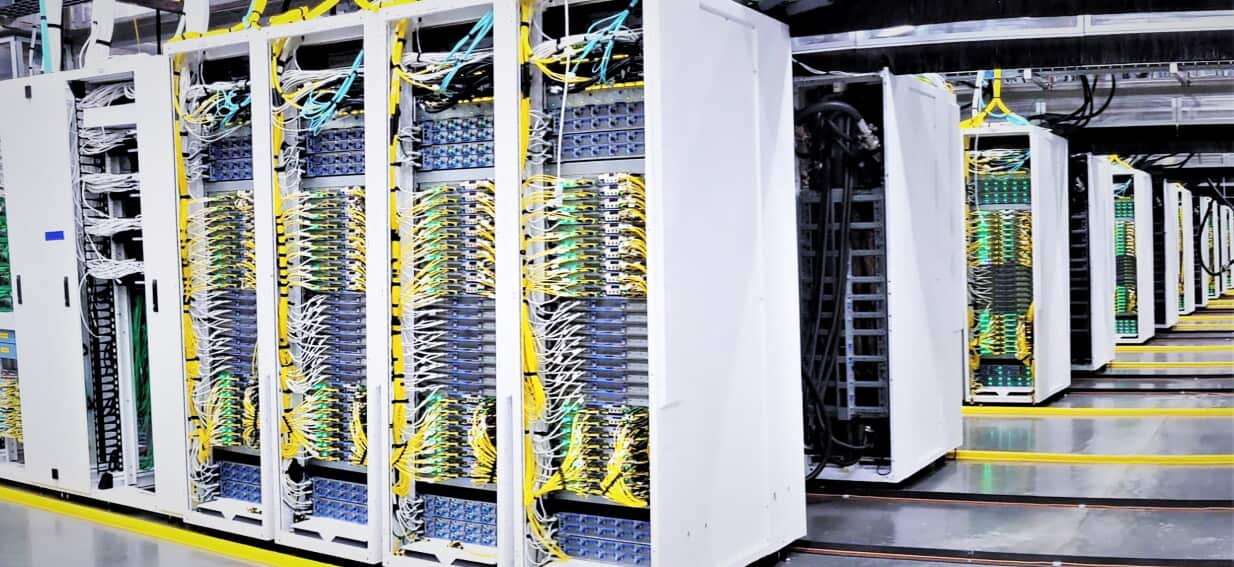
Traditional data centres run servers that handle standard web traffic, store your photos, and run basic cloud applications. AI is different. Training a large language model requires thousands of high-density graphics processing units (GPUs) packed tightly into server racks. These chips run at maximum capacity for weeks or months at a time. They draw massive amounts of electricity and generate an unprecedented amount of heat.
To keep these servers from crashing, data centres use cooling systems. The most common and cost-effective method relies on evaporative cooling towers.
Water flows through the facility, absorbs the heat from the server rooms, and travels to a cooling tower. There, some of the water evaporates into the air, which cools the remaining water down so it can be pumped back inside. This evaporated water is gone from the local watershed. It does not go back down the drain to be treated and reused. It vanishes into the atmosphere.
How much water are we talking about? Researchers from the University of California, Riverside, have been tracking this data closely. Their findings are alarming. A single conversation with a standard chatbot—say, a 20-to-50-prompt exchange—essentially dumps a 500-millilitre bottle of fresh water down the drain.
That does not sound like a crisis when it is just you sitting at your desk. Now multiply that by hundreds of millions of users daily. Then add the water used during the initial training phase of these models. Training a model like GPT-3 in Microsoft’s advanced data centres required roughly 700,000 litres of clean water. That was years ago. The models running today are exponentially larger, and their water consumption has scaled accordingly.
The Local Strains and False Solutions
Tech giants love to brag about their facilities being located in regions with cheap land and business-friendly tax laws. They rarely mention that these regions are often already suffering from severe water stress.
Take a look at Arizona, Iowa, or parts of Virginia. These areas have become global hubs for data centre construction. In Council Bluffs, Iowa, tech infrastructure consumes a massive percentage of the city’s water supply. During peak summer months, when residents are asked to conserve water to protect the local supply, data centres keep gulping millions of gallons daily to keep global internet services running smoothly.
The industry defends itself by pointing to water recycling metrics. They claim they reuse water multiple times within their closed-loop systems. That sounds great on paper, but it obscures the real issue.
While a data centre might cycle the same water through its system several times, the end of the process still relies on evaporation to actually dump the heat. Once that water evaporates, it is lost to the immediate local ecosystem. Furthermore, the water used in these cooling towers must be highly purified, fresh water. You cannot use raw seawater or heavily contaminated wastewater without corroding the expensive infrastructure. The industry is directly competing with agriculture, local businesses, and residential communities for clean, drinkable water.
Some companies try to hide their impact by switching to air conditioning systems instead of evaporative cooling. This solves the direct water problem, but it creates a massive energy problem. Chillers and mechanical air conditioning systems consume immense amounts of electricity. Because our global power grids still rely heavily on fossil fuels, using mechanical cooling simply trades water consumption for increased carbon emissions. It is a shell game. You either burn more coal and gas, or you dry out the local river.
Shifting From Hype To Real Accountability
The tech sector cannot keep hiding behind vague sustainability reports that bundle water usage into confusing metrics. We need immediate, structural changes in how these facilities are built, monitored, and regulated.
First, governments must mandate complete transparency. Right now, many tech companies treat their specific water usage data as a trade secret. They hide behind non-disclosure agreements signed with local municipalities. This has to stop. Communities have a fundamental right to know exactly how many millions of gallons of their public water supply are being diverted to server farms.
Second, the industry needs to move away from evaporative cooling entirely, regardless of the financial cost. Technologies like direct-to-chip liquid cooling and immersion cooling—where servers are submerged in specialized, non-conductive fluids—are far more efficient. They require almost no water consumption because they do not rely on evaporation to dissipate heat. They are expensive to install, but the trillion-dollar companies driving the AI boom can absolutely afford the investment.
Finally, we need strict zoning laws. Building a massive AI data centre in an arid desert environment like Arizona is environmental malpractice. Future facilities must be restricted to regions where ambient temperatures are naturally low enough to allow for passive air cooling, or where they can safely utilize non-potable industrial wastewater without threatening local drinking supplies.
If you want to reduce your own digital footprint, you can start by being more intentional with your technology use. Stop treating AI tools as an infinite, cost-free resource for trivial tasks. Every useless image generation or conversational query has a physical cost.
On a larger scale, pay attention to local planning boards and state legislation. Challenge the construction of new data centres in your region unless the operators can prove they will operate with zero net impact on the local water table. Demand that your local representatives prioritize human thirst over computational convenience. The data cloud is not an ethereal, magic entity. It is a heavy, thirsty, industrial reality, and it is time we treated it like one.