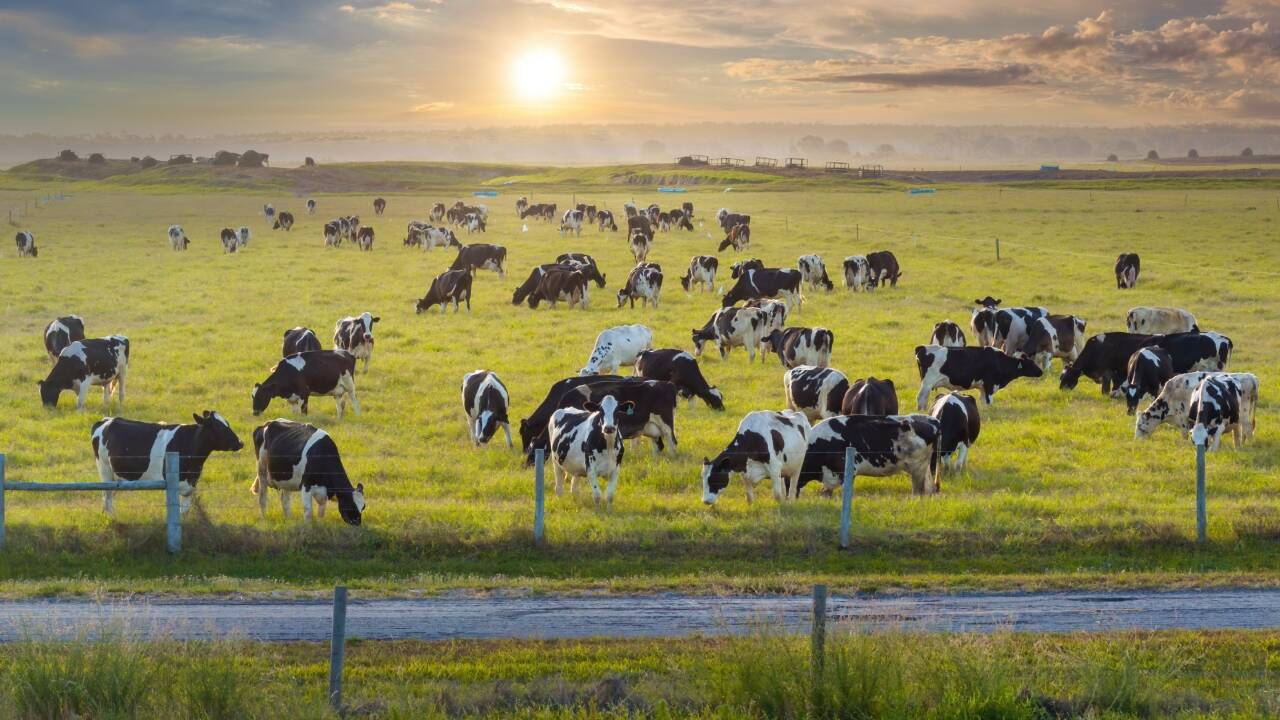
Dawn on the interior prairies of Florida does not arrive with a polite knock. It arrives with a wet slap of fog against corrugated tin, the low creak of windmill steel turning in a sluggish breeze, and the heavy, unmistakable scent of damp saw palmetto and warm cow manure.
Boots crunching on crushed limerock. Coffee steaming in a dented enamel mug. A pickup truck idling with its headlights cutting two pale cones through mist so thick you can taste the tannin in the air.
Most people picture Florida as a thin ribbon of stucco, salt spray, and neon—a beach towel stretched across the Atlantic and the Gulf. They forget the spine of the state. They forget the vast, rolling interior where cattle still walk past cypress domes and sandhill cranes lift off flooded pastures with a rattle like dry bones. When a headline announces that Florida is committing $8.7 million to preserve two working ranches, the eyes of most readers glaze over before they finish the sentence. Eight point seven million. Two ranches. Sounds like a line item in a budget spreadsheet that nobody argues about and nobody remembers by Tuesday.
Yet a ranch is never just grass and wire.
It is water. It is wildlife corridors. It is a way of life that refuses to turn into a gated subdivision with a clubhouse named after a dead panther.
The Quiet Math of Open Land
Numbers can make a heart go numb, or they can make the hair on your arms stand up if you look at what they measure.
When state agencies, conservation boards, and landowners put together roughly $8.7 million for two working ranches, they are not buying a museum piece. A museum freezes a thing in amber and charges admission while the world outside moves on. A working ranch stays in motion. Cattle graze. Fences get mended after summer lightning storms. Grass gets cropped to a height where bobwhite quail can nest and gopher tortoises can dig their deep, cool burrows away from the midday sun.
Consider what happens next: once a parcel of open land in peninsular Florida is paved, poured, and platted into quarter-acre lots, the math flips permanently. You do not un-pour concrete. You do not un-build a cul-de-sac.
I have stood on the edge of enough disappearing pastures to know what that transition feels like in your gut. You drive past a field you knew ten years ago when red-shouldered hawks hunted from the fence posts. Now there is a retention pond edged in St. Augustine sod, a row of identical roofs with solar panels tilted toward the south, and a sign promising "Luxury Country Living" at the entrance. Country living without the country. A ghost wearing a cowboy hat.
To be completely honest, conservation funding can feel confusing and sometimes frustrating from the outside. People ask why public dollars go toward private land, or whether a few million dollars really moves the needle when thousands of acres across the state are sold every month. Those are fair questions. Anyone who cares about how taxpayer money is spent—and how fast Florida is changing—has every right to be skeptical.
Here is the plain truth as I understand it: buying every acre outright at market price would cost billions the state does not have. Conservation easements and targeted acquisitions work by paying landowners for development rights or securing key parcels before they vanish into speculative land banks. It is triage, not a magic wand. Sometimes it feels like holding a thimble under a waterfall. Still, a thimble full of water beats a dry cup when the sun is high.
Two Ranches, One Fragile Map
Let us use a hypothetical scenario to make the stakes tangible—not to invent facts, because the real story belongs to the actual ranches and families involved, but to show what sits behind those quiet acreages on a map.
Imagine two neighboring operations—let us call them the Miller place and the Cypress Slough Ranch, purely as hypothetical stand-ins for real working cattle properties.
On the hypothetical Miller ranch, three generations have learned how the water moves after a August cloudburst. When rain hammers the central flatwoods, water does not simply vanish; it sheets across low swales, filters through native wiregrass and sawgrass, and recharges the underground aquifer or feeds downstream marshes. If you drain those swales with ditches so you can plant rows of houses, the water rushes off too fast, carrying nutrients and silt where they do not belong, while dry spells hit harder because the sponge was squeezed dry.
On the hypothetical Cypress Slough Ranch a few miles down a two-lane county road, the pastures sit along a natural bridge between a pine flatwood and a hardwood hammock. Florida panthers—rare, wide-ranging cats that need huge territories just to survive—do not read zoning maps. Black bears do not care about property lines drawn in 1954. Scrub-jays, indigo snakes, and wading birds move across mosaic landscapes where open pasture meets wet marsh and scrub oak.
Break one link in that chain and the whole line frays.
A working ranch acts like a hinge. Without it, a state park on one side and a wetland preserve on the other become islands. Islands shrink species. When animals cannot move to find mates, food, or higher ground during floods, populations weaken and fade.
Meet Tom and Elena (A Hypothetical Look at Real Pressure)
Ranching is hard. That word gets thrown around lightly by people who have never pulled a calf in the mud at two in the morning or watched hay prices climb while beef prices wobble.
Picture a hypothetical couple—Tom and Elena—running a cow-calf operation that has been in the family since before air conditioning was common in rural homes. Let us be clear: Tom and Elena are composite, hypothetical characters built to illustrate real pressures faced by Florida cattle families, not real individuals.
Tom knows the sound of his tractor engine the way some people know their own pulse. He knows which gate latch sticks when the humidity hits ninety percent. He knows that when a developer knocks on the kitchen door with a glossy folder and a number with six or seven zeros behind it, the temptation is not greed. It is exhaustion.
Property taxes climb. Equipment costs double. Hurricanes chew up fencing and knock down water troughs. Meanwhile, their kids might love the land deeply while knowing how thin the margins are if you try to make a living solely selling calves at auction.
"You can't eat scenery," Tom might say over coffee, rubbing his knuckles where an old rope burn left a pale ridge.
Elena looks out the window toward the oak hammock where egrets roost at dusk. "No," she answers. "You can't. Though it hurts to think of those oaks coming down for a parking lot."
That tension—between holding onto heritage and surviving economically—is the beating heart of rural Florida. Conservation programs that put real money on the table, like an $8.7 million commitment aimed at preserving two working ranches, do not erase every hardship. They do something quieter and more practical: they give families and conservationists room to breathe, keep land in agricultural production, and lock in protection before a bulldozer ever warms up its tracks.
Why Cows Matter to Wild Places
To someone who grew up in an apartment tower or a suburban cul-de-sac, the idea that raising cattle helps protect nature can sound backward. We are taught to separate civilization from wilderness, as if every human footprint were a stain.
Think of it like pruning a fruit tree. Left completely untouched in a crowded orchard, branches tangle, shade out the sun, and choke off airflow. A skilled hand cuts wisely so light reaches the core and the tree stays strong.
Native Florida ecosystems evolved alongside large grazers and periodic fire. Before cattle arrived centuries ago, herds of grazing animals and natural lightning fires kept woody brush from taking over every open meadow. Modern cattle, managed thoughtfully by ranchers who know their grass, fill part of that ecological role.
When pasture stays open and healthy:
- Rainwater soaks and filters instead of racing across asphalt and picking up oil, fertilizer, and trash.
- Ground-nesting birds find cover and insects in grass that has not been mowed into a golf green or paved over.
- Wildlife corridors stay connected, letting deer, bears, turtles, and panthers travel without meeting a wall of chain-link and traffic.
- Local food production stays closer to home, keeping agricultural skills and rural communities alive rather than hollowing them out.
It is not a fairy tale. Overgrazing can harm land just like neglect or overdevelopment can. Good stewardship takes work, observation, and humility. When public funds partner with working ranches to keep that stewardship viable, everyone—from the rancher to the hiker to the kid drinking tap water fifty miles away—shares the benefit.
The Price of Looking Away
Florida has grown fast for over a century, and growth brings real good along with real loss. People move for warmth, opportunity, jobs, and sunshine. Nobody gets to pull up the ladder once they have climbed aboard.
Still, growth without restraint eats its own seed corn.
If every wild corner and every working pasture turns into subdivisions and strip malls, what happens to the thing that made people fall in love with the place in the first place? You end up with endless traffic on widening highways, hotter streets, heavier stormwater runoff, and nowhere left that feels quiet under a wide sky.
Eight point seven million dollars across two working ranches will not save every acre in Florida. Nobody should pretend it will. Land prices are steep, competing interests are loud, and the clock ticks faster every year.
Yet every saved acre is a vote for permanence over pavement.
Picture a late afternoon months or years from now. Heat shimmers off a stretch of wiregrass. A calf stands close to its mother near a line of cabbage palms while a kestrel hovers above the ditch, wings beating fast against the wind. No jackhammers. No survey stakes hammered into the turf. Just grass, water, sky, and time moving at the pace of living things.
A fence line holds. The prairie breathes.