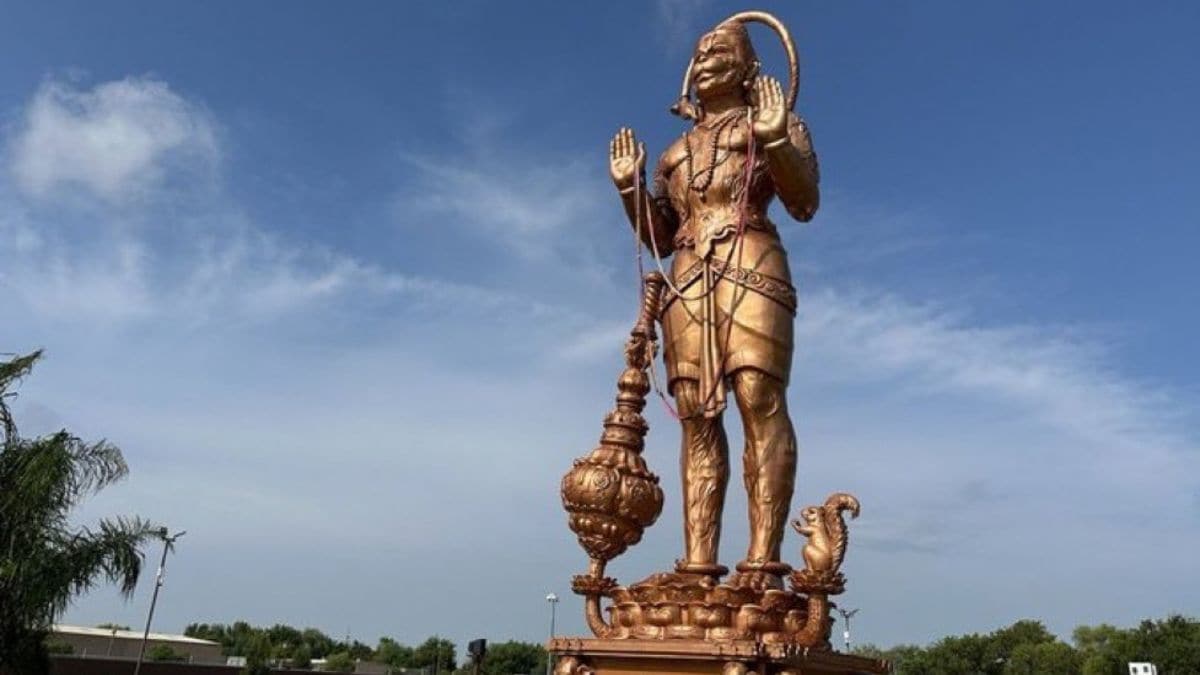
A 90-foot bronze-hued figure standing tall in Sugar Land, Texas, has unexpectedly turned into a flashpoint for American culture wars. Consecrated in August 2024 at the Sri Ashtalakshmi Temple, the towering monument known as the Statue of Union is North America's tallest representation of the Hindu deity Hanuman. Costing nearly $8 million, it was designed to be a spiritual center for peace. Instead, it drew immediate ire from hardline commentators, local activists, and conservative groups who view its sheer scale as an affront to local religious norms.
When conservative influencer Jesse Hughes posted a photo of the monument on social media alongside the threat that "when we win, we are tearing this down", it reignited a fierce online and offline debate. But why does a private religious structure on temple grounds provoke such intense hostility? The answer lies in a volatile mix of religious nationalism, demographic shifts, and fundamental misunderstandings of American property rights.
The Roots of the Backlash
Opposition didn't start with viral social media posts. Shortly after the statue opened, local church members gathered near the site to pray and protest against what they labeled a "foreign deity". Figures like Texas Republican activist Carlos Turcios and political candidate Alexander Duncan jumped into the fray, framing the monument's presence as an ideological invasion.
Critics often lean on narrow definitions of American identity, arguing that public displays should reflect traditional Western or Christian architecture. They treat a monument built entirely on private religious property with private funds as if it were a government-mandated installation. This deliberate confusion ignores a basic legal reality: the First Amendment protects the right of religious communities to construct houses of worship and associated symbols without state interference.
Pushing Back Against Bigotry
The backlash from right-wing commentators hasn't gone unanswered. Hindu Americans, veterans, and interfaith advocates have strongly pushed back against online threats of demolition. Ruchir Bakshi, a U.S. Army combat veteran and Hindu American, publicly voiced his frustration, pointing out the hypocrisy of defending democratic freedoms abroad while facing religious hostility at home. Organizations like the Coalition of Hindus of North America (CoHNA) have echoed these sentiments, condemning open bigotry disguised as political commentary.
At its core, the dispute highlights a deep anxiety among certain groups regarding demographic changes in suburban Texas. The Houston metropolitan area boasts a thriving, highly integrated South Asian community that contributes heavily to tech, medicine, and local commerce. Monuments like the Statue of Union represent permanence and visibility—qualities that make critics uncomfortable.
What the Law Actually Says
Threats to tear down private religious artifacts overlook property law and constitutional protections. The Statue of Union sits squarely on land owned by the Sri Ashtalakshmi Temple. Neither local authorities nor online commentators possess the legal authority to seize or destroy private religious property simply because they object to the theology behind it.
While freedom of speech allows commentators to voice personal objections, direct threats of destruction cross lines that draw scrutiny from legal experts and law enforcement. Religious freedom in the United States protects minority faiths just as robustly as majorities, provided those groups operate within the law.
Stop treating cultural coexistence as a zero-sum game. If you value personal liberty, that freedom has to apply to everyone—even when it takes the form of a 90-foot statue you don't happen to understand.
Texas Hanuman Statue Row Erupts Ahead of US Midterms After YouTuber Calls for Removal
This video provides an overview of the political tensions and online controversies surrounding the Hanuman statue in Texas ahead of the midterm elections.