It was 4:14 AM under the sickly yellow glow of Terminal 3. My toothbrush was currently fraternizing with a stray tube of industrial-strength sunscreen, and the resulting chemical union had claimed three pairs of wool socks and a passport sleeve.
You know the moment.
The security line is forty minutes long, the flight boards in twenty, and your entire life is compressed into a nylon suitcase that appears to possess a malicious intelligence of its own. Every zipper is a hazard. Every pocket is a black hole. You reach for lip balm and emerge with a tangle of phone chargers that look like a nest of angry copper vipers.
Travel is supposed to be transformative. It is supposed to stretch our minds and introduce us to the staggering architecture of the world. Instead, for most of us, it starts with a panic attack over a leaking shampoo bottle.
The root of the disaster is rarely the journey itself. It is the architecture of our bags.
Consider a hypothetical traveler named Sarah. Sarah is a project manager who lives on three hours of sleep and caffeine. Last Tuesday, she faced the bi-annual rite of packing for a week-long conference in Chicago. She did what millions do: she threw her cosmetics into a flimsy plastic grocery bag she found under the sink, shoved it into her carry-on, and prayed to the aviation gods.
By the time she reached her hotel room, her curling iron had short-circuited against a soaked bottle of face toner, and her favorite silk blouse smelled permanently of eucalyptus mint.
We accept this chaos as the price of admission for seeing the globe. We shrug. We buy overpriced travel-size toothpaste at the airport gift shop because our old one exploded. We treat disorganization as a personal moral failing, assuming we just are not the kind of disciplined people who can pack light.
That is a lie.
The truth is mechanical. A bad container creates bad habits. When you cannot see what you own, you buy duplicates. When your gear lacks structure, gravity does what gravity always does: it pulls everything into a dense, muddy mass at the bottom of your luggage.
For years, the market offered two extremes for this problem. There were flimsy pouches that offered zero protection and crumpled the second you set them down, and there were rigid leather vanity cases that took up half your suitcase and weighed more than your actual clothes. Neither made sense for a modern world where we move fast, pack light, and demand efficiency.
Then came a quiet shift in how packing gear is engineered.
Designers started looking at travel bags not as luggage accessories, but as portable dressers. The philosophy changed. Instead of asking how much stuff could fit into a pouch, they asked how the pouch could serve the human operating it under pressure.
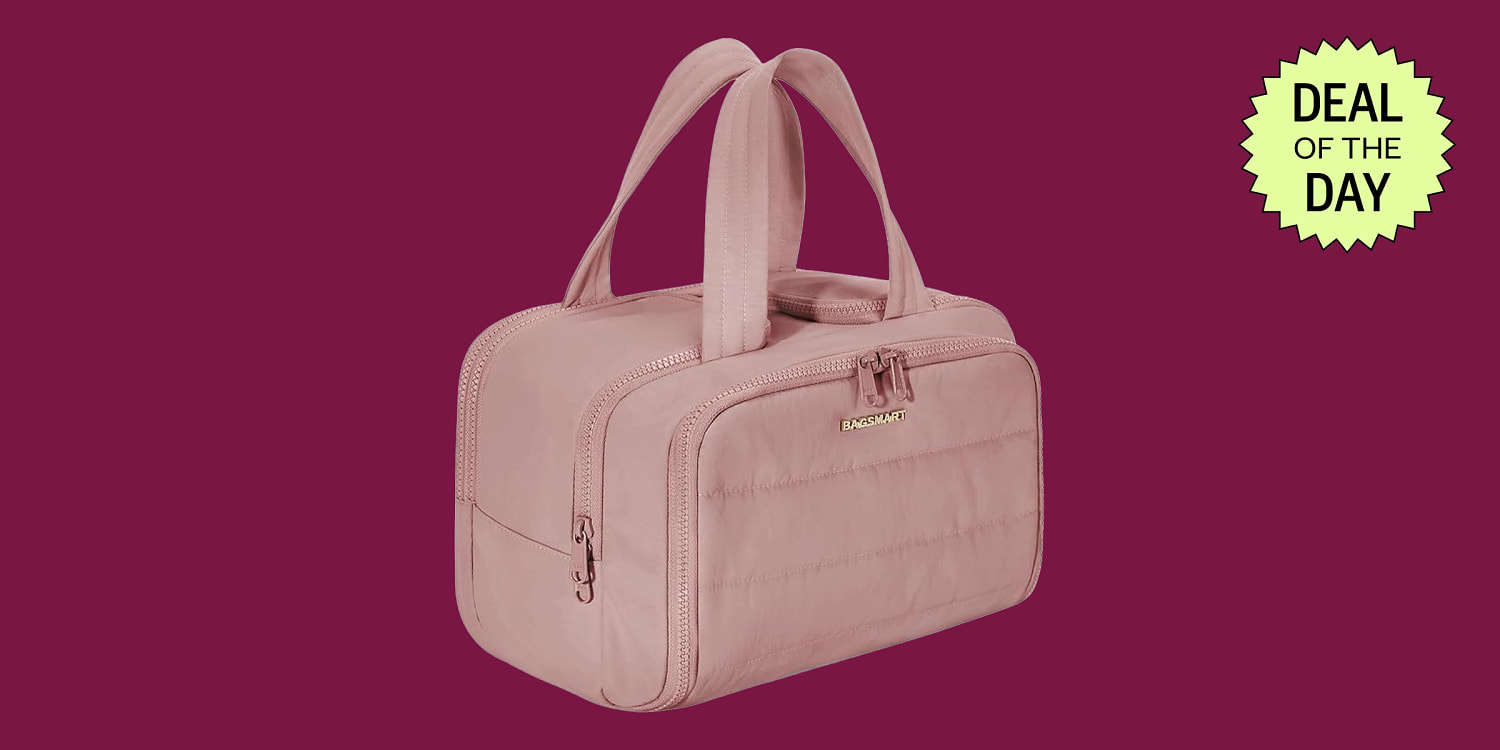
This brings us directly to a specific piece of equipment that has quietly captured the attention of frequent fliers everywhere: the Bagsmart toiletry bag.
Let us be entirely transparent about what this is. It is not a magic talisman. It will not book your flight upgrades or clear TSA PreCheck for you. It is a piece of fabric, zippers, and clever engineering. But when you are standing in a cramped airplane bathroom at 30,000 feet trying to freshen up before a morning meeting, the difference between a good bag and a bad one feels monumental.
The design relies on a hanging hook. That single addition changes the physics of travel hygiene. In older setups, you placed your pouch on hotel counters that have seen things you do not want to think about. You balanced it precariously on the edge of tiny sinks. You dug blindly into dark caverns.
With a hanging structure, your entire kit unfurls into a vertical shelving unit.
Suddenly, your skincare, your razor, and your medications are suspended at eye level. Everything has a transparent, water-resistant pocket. You can see the toothbrush. You can see the contact lens solution. You do not have to unpack your entire life just to brush your teeth before landing.
Right now, that specific organizational peace of mind happens to be available at a significant discount. A forty percent price drop on a market-tested piece of gear is not just a sale; it is an invitation to fix a chronic, low-grade annoyance that you have simply learned to tolerate.
We tolerate too much friction in our daily lives. We accept sticky buttons, slow Wi-Fi, and luggage zippers that jam halfway. We spend mental energy managing our gear when that energy should be reserved for the adventures waiting on the other side of the baggage claim.
Think about your last trip.
Recall the frantic search for nail clippers at midnight. Remember the damp corner of your duffel bag where the conditioner leaked because the cap was loose. Remember the sheer exhaustion of living out of a suitcase that felt like an enemy combatant.
Now, imagine stepping up to a hotel bathroom counter, unzipping a single, well-structured compartment, and watching your entire routine fall effortlessly into place in under ten seconds.
That is not luxury. That is functionality.
The sale will end. The discount codes will expire. Prices will creep back up to standard retail. But the real cost is not financial. The real cost is the continued friction of living out of a messy bag, trip after trip, year after year, accepting disorder as your default state.
You do not need more packing tips. You do not need a stricter routine. You simply need a better tool for the journey.
The taxi is waiting downstairs. The terminal lights are humming. Your passport is in your hand.
Make sure the rest of your kit is ready for what comes next.