The wind off the Nuuk fjord does not just blow; it bites. It carries the scent of ancient ice and a vast, quiet isolation that defines the world's largest island. For decades, Greenland existed in the American subconscious as a massive, white blank spot at the top of the map. A place of dog sleds, weather stations, and absolute silence.
Then came the late summer of 2019, when a single, audacious proposition shattered that silence. Donald Trump wanted to buy it.
The immediate reaction from the global press was a collective, mocking laugh. It was treated as a bizarre real estate whim, a late-night tweet blown out of proportion, or perhaps a joke from a real estate mogul who had mistaken geopolitics for a Manhattan boardroom. The Danish Prime Minister called the idea "absurd." The internet responded with memes of a gold-plated Trump Tower photoshopped onto a pristine glacial landscape.
But behind the headlines, inside the secure briefing rooms of Washington and the quiet offices of former national security advisors, nobody was laughing. They were calculating.
Because the impulse to secure Greenland was not a joke. It was the public eruption of a cold, hard strategic reality that has been quietly keeping military planners awake at night for generations. To understand why an American president would look at two million square kilometers of ice and see the most valuable piece of real estate on Earth, you have to look past the political theater. You have to look at the map through the eyes of the people whose job it is to prepare for the next great global conflict.
The Advisor in the Room
Consider the perspective of a national security insider tasked with assessing American vulnerabilities. When the concept of acquiring Greenland re-emerged during the Trump administration, it did not come out of nowhere. It was driven by a sudden, alarming realization: the Arctic ice was melting, and America's rivals were already moving into the newly opened waters.
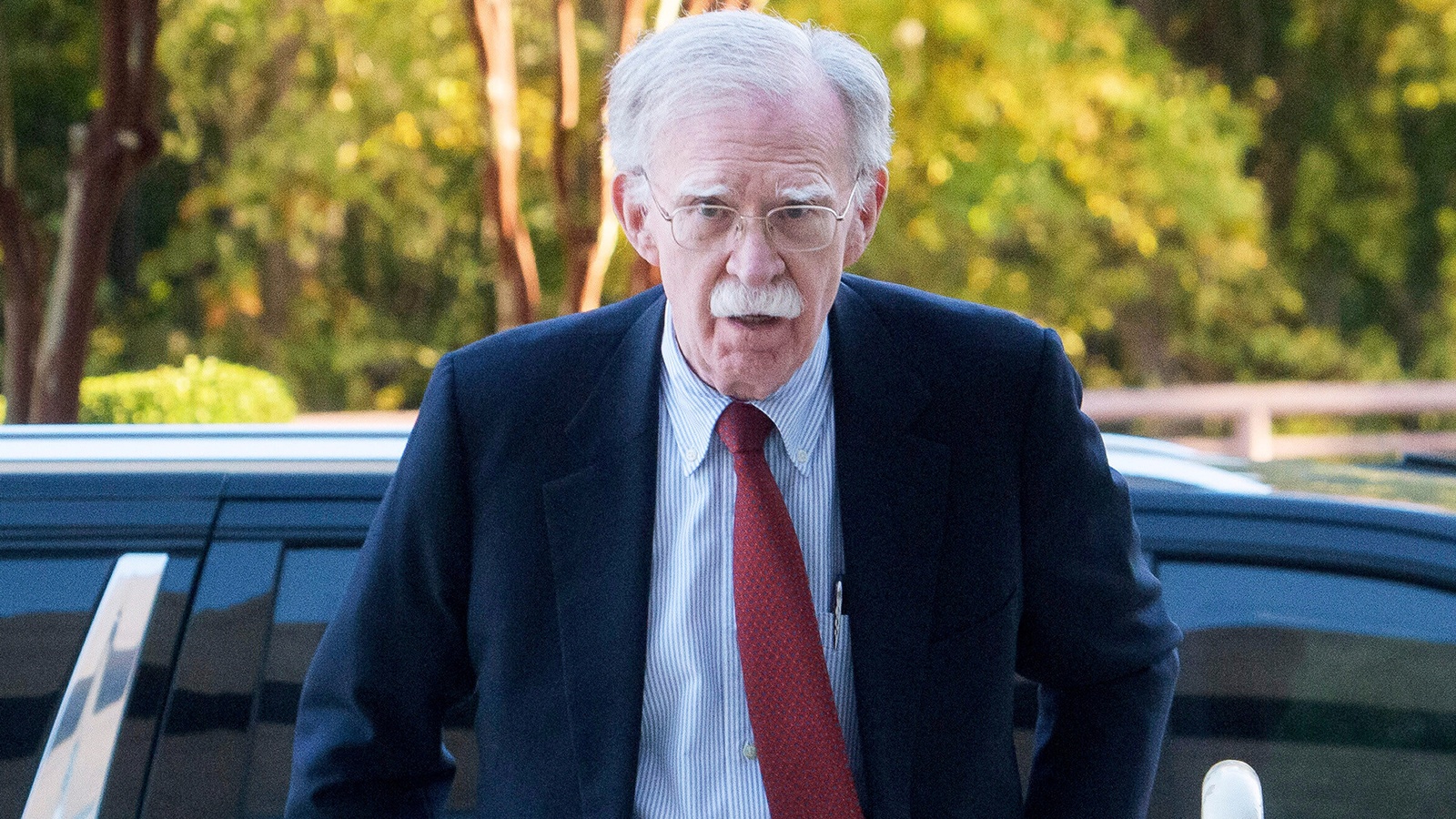
John Bolton, who served as Trump’s National Security Advisor during that period, later clarified that while the idea of a literal purchase was unconventional, the strategic impulse behind it was dead serious. Greenland is the ultimate gatekeeper. If you control Greenland, you control the shipping lanes of the North Atlantic. You control the early warning radar systems that detect incoming ballistic missiles. You control the airspace between Moscow and New York.
For decades, the United States assumed its northern flank was safe, protected by an impassable shield of solid ice. That shield is disappearing. Open water means open lanes for Russian attack submarines. It means Chinese cargo ships cutting thousands of miles off their journeys to European markets.
Imagine a hypothetical radar technician stationed at Thule Air Base—now renamed Pituffik Space Base—sitting in a darkened room under the polar night. For seventy years, that base has been America's northernmost eye, scanning the horizon for threats over the North Pole. Now, that technician is looking out at a region that is rapidly becoming crowded.
Russia has spent the last decade reopening Soviet-era military bases across its Arctic coastline, painting its hulls with ice-breaking reinforcement, and positioning missile batteries aimed directly across the polar cap. China, declaring itself a "Near-Arctic State" despite its northernmost border being thousands of miles away, has tried to buy abandoned naval bases and fund massive airport expansions in Greenland.
When Washington looked at Greenland in 2019, it didn't see an ice sheet. It saw a massive, undefended aircraft carrier sitting right between the United States and its two greatest competitors.
The Wealth Hidden in the Thaw
But strategy is only half the equation. The other half is raw, elemental wealth.
Greenland is not just ice. Underneath that crushing weight lies a geological jackpot. As the climate warms and the ice retreats, it exposes vast stretches of land that have been sealed away for millennia. What is being revealed is precisely what the modern digital economy runs on: rare earth minerals.
Neodymium. Praseodymium. Dysprosium.
These are not household names, but they are the silent fuel of the twenty-first century. Without them, you cannot build an electric vehicle battery, a wind turbine, a smartphone, or the guidance system of an F-35 fighter jet. Right now, China controls roughly 70% of the world's extraction of these minerals and an astonishing 90% of their refining capacity.
A single country has a chokehold on the future of global technology.
Now look back at Greenland. Geologists estimate that the island holds some of the largest undeveloped deposits of rare earth elements on the planet. The Kvanefjeld deposit in southern Greenland alone could fundamentally shift the balance of global economic power. For Washington, the math was simple: allowing a foreign adversary to gain a foothold in Greenland's mining sector was a catastrophic risk to national security.
When the United States offered to buy the territory, it was a clumsy, twentieth-century solution to a twenty-first-century resource war. It was an attempt to buy out the competition before they could dig their shovels into the ground.
The Human Element on the Ice
It is easy to get lost in the grand geometry of global power, to treat Greenland as a giant chessboard. But chessboards do not have inhabitants. Greenland does.
The true friction of this geopolitical tug-of-war is felt by the 56,000 people who actually call the island home. Mostly Greenlandic Inuit, they live in isolated coastal towns where the modern world and ancient traditions collide daily. For them, the sudden American interest was both a threat and a strange, complicated opportunity.
Greenland is a self-governing territory of Denmark, but it relies on Copenhagen for a massive annual subsidy to keep its economy afloat—roughly $600 million a year, which makes up more than half of the local government's budget. Many Greenlanders long for total independence from their former colonial masters. But independence requires money. It requires an economy that can stand on its own feet.
The dilemma is agonizing. To fund independence, Greenland must open its pristine wilderness to massive, destructive mining operations. It must choose between preserving a fragile ecosystem that has sustained its culture for centuries, or selling its treasures to Western or Chinese mining conglomerates to buy its freedom.
When the Trump administration floated the idea of buying the island, it completely ignored this human reality. You cannot buy a people. The backlash from Nuuk was immediate and fierce. The message was clear: Greenland is open for business, but it is not for sale.
Yet, the American focus did not fade when the headlines did. The Biden administration followed up not with offers to buy the island, but with a quieter, more sophisticated diplomatic surge. They reopened the American consulate in Nuuk, which had been closed since 1953. They poured millions into economic aid, tourism development, and sustainable mining projects. They realized that if you cannot buy the land, you must win over the people who live on it.
The Unavoidable North
The conversation about Greenland was never really about Donald Trump, nor was it a passing eccentricity of an unpredictable presidency. It was the first loud, clumsy opening salvo of a new geopolitical era.
The Arctic is melting, and as the ice turns to water, a new ocean is being born. With that ocean comes a mad scramble for resources, territory, and dominance that will shape the next century.
America cannot walk away from Greenland because history is cyclical, and geography is destiny. During World War II, when Denmark fell to Nazi Germany, the United States immediately stepped in to protect Greenland, recognizing that whoever held those fjords held a knife to the throat of the American homeland. During the Cold War, we built secret cities under the ice, like Project Iceworm, trying to hide nuclear missiles beneath the glaciers.
We are entering a third chapter of that same story.
The next time you look at a globe, tilt it forward. Look down from the top. You will see that the distances between the world's great powers shrink to almost nothing across the Arctic circle. You will see that Greenland sits like a massive wedge, splitting the Atlantic, dominating the north, holding the key to both the wealth of the earth and the security of the skies.
The laughter of 2019 has faded. In its place is the quiet, steady hum of heavy machinery, the rustle of diplomatic papers, and the unmistakable sound of a superpower digging in its heels for a long, cold winter. The blank spot on the map is gone forever.