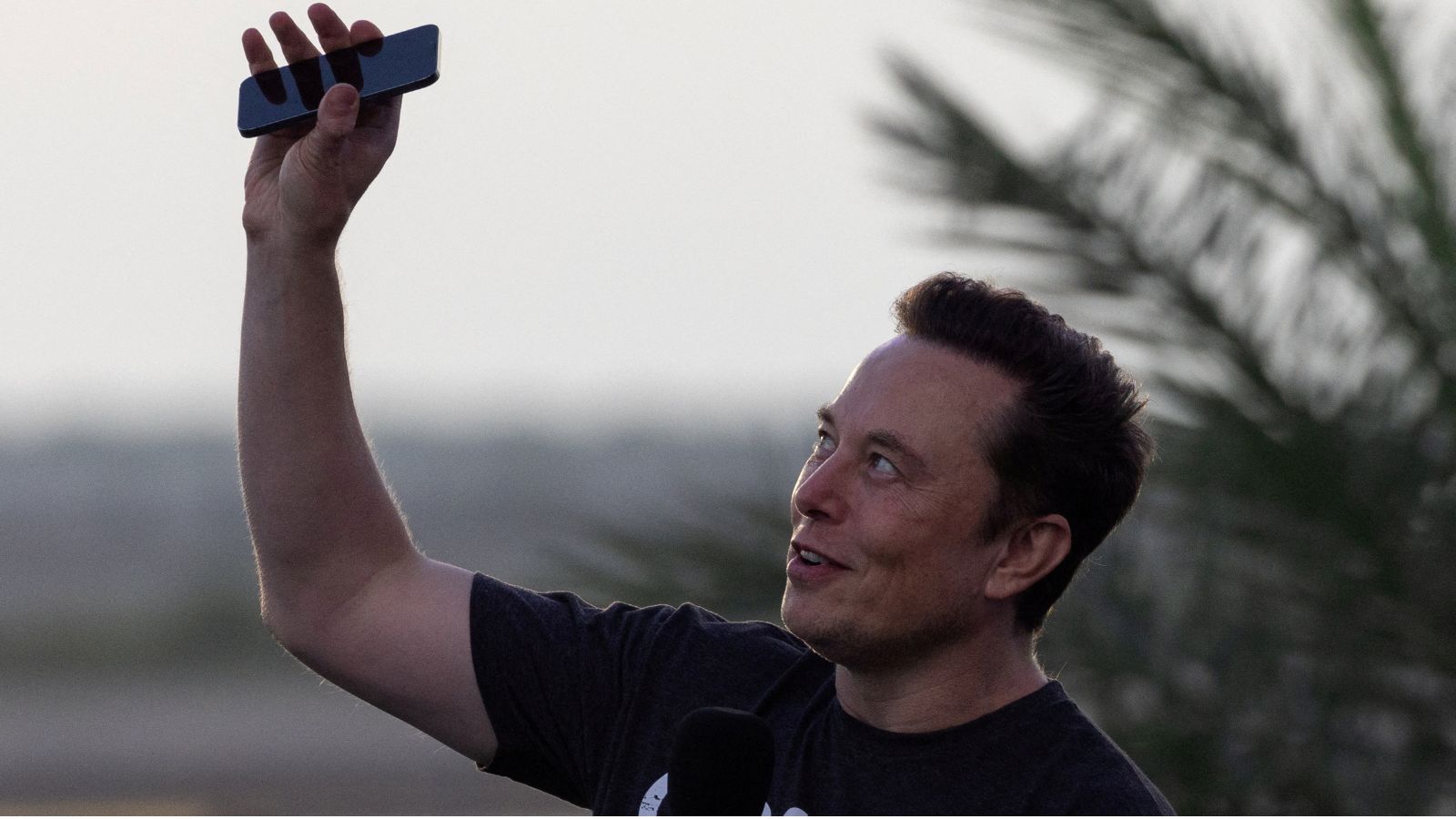
SpaceX completed the largest initial public offering in financial history today, raising $75 billion at a fixed price of $135 per share before popping above $170 in afternoon trading. The market debut instantly pushed the company’s valuation past $2.2 trillion, transforming the aerospace company into a top-ten Wall Street heavyweight and minting Elon Musk as the world's first paper trillionaire. Yet underneath the euphoria of retail investors rushing international brokerages and crashing the Robinhood app lies a staggering financial reality. SpaceX pulled in $18.7 billion in revenue last year while bleeding a massive $4.3 billion operating loss, proving that the public markets are no longer just funding a launch company, but rather absorbing a highly speculative bet on orbital artificial intelligence.
Wall Street treats retail investors like fuel for its grandest engines, and the SpaceX debut on the Nasdaq exchange under the ticker symbol SPCX is the ultimate manifestation of this dynamic. The offering lacked the typical institutional safeguards. There was no price discovery range offered by underwriters, only an aggressive take-it-or-leave-it price set by Musk himself. Because investor demand was oversubscribed nearly fourfold, the typical institutional filtering didn't apply. Instead, a massive retail allocation of up to 30% bypassed normal skepticism, heavily driven by the recent acquisition of xAI, Musk's artificial intelligence startup, into the broader SpaceX corporate architecture.
The Subsidized Myth of Starlink Profitability
Mainstream analysis points to Starlink as the commercial foundation backing the company’s astronomical valuation. The narrative suggests that the consumer satellite broadband division generates the predictable, high-margin cash flow required to bankroll the multi-planetary ambitions of its founder. The math tells a completely different story.
Operating a mega-constellation in low Earth orbit requires constant, capital-intensive asset replacement. Satellites deployed by SpaceX possess a functional lifespan of roughly five years before atmospheric drag or hardware degradation necessitates de-orbiting. This creates an unyielding treadmill of capital expenditure. To maintain its current subscriber footprint, the company must launch hundreds of replacement satellites annually, treating its hardware not as long-term infrastructure, but as consumable inventory.
When a traditional telecom company digs trenches to lay fiber optic cables, that asset can depreciate over decades. SpaceX does not enjoy this luxury. The capital raised on Wall Street today will not merely fund expansion; it will immediately be consumed by the continuous manufacturing and launching of hardware designed to burn up in the atmosphere by the turn of the decade. The $4.3 billion operating loss recorded last year reflects this systemic burden.
The Trillion Dollar AI Conundrum
The critical factor that propelled SpaceX from its previous private valuation of under $200 billion to a multi-trillion-dollar market cap is its pivot toward AI infrastructure. By absorbing xAI, the rocket manufacturer repositioned itself to build massive, power-hungry data centers. The market is valuing the firm as an AI powerhouse that happens to own rockets, rather than an aerospace contractor with an internet business.
+-------------------------------------------------------------+
|               SPACEX ORBITAL AI ARCHITECTURE                |
+-------------------------------------------------------------+
|                                                             |
|   [ xAI / Grok AI Models ] ---> [ Terrestrial Megawatt ]    |
|               |                 [   Data Centers     ]    |
|               v                                             |
|   [ Direct Laser Interlink ]                                |
|               v                                             |
|   [ Starlink Constellation ] --> [ Distributed Edge Compute ]|
|                                  [   In-Orbit Nodes    ]    |
+-------------------------------------------------------------+
This structural merge introduces severe operational friction. AI training models require unprecedented amounts of electricity and compute power, prompting the company to construct makeshift power plants and secure controversial methane gas generator permits. This pivot has already triggered intense regulatory pushback and civil rights litigation concerning environmental pollution. Wall Street is currently ignoring these friction points, assuming that the sheer velocity of the AI buildout will outrun regulatory oversight.
Furthermore, the operational synergies between advanced rocket telemetry, global satellite routing, and large language models remain highly theoretical. The investing public has accepted the premise that an AI supercomputer operating in orbit or tethered to a global satellite array justifies a valuation higher than most legacy tech monopolies. This premise assumes that distributed edge computing via low Earth orbit satellites can compete with land-based, fiber-connected data centers. It overlooks the inescapable realities of latency, thermal management in a vacuum, and cosmic radiation degradation on commercial-grade silicon.
The Governance Mirage
Public market investors normally demand robust board oversight, independent committees, and protective covenants before handing over tens of billions of dollars. SpaceX has effectively decoupled itself from these expectations. Elon Musk controls approximately 85% of the company's voting shares through a dual-class stock structure, rendering minority shareholders completely powerless.
Consider a hypothetical corporate scenario where a major capital allocation decision backfires. In a standard publicly traded entity, institutional asset managers can pool voting power to replace board members, enforce cost-cutting measures, or pivot strategic direction. At SpaceX, no such mechanism exists. If the capital raised today is diverted into unprofitable deep-space exploration or high-risk AI experiments that yield no commercial return, public investors have zero recourse. They are passengers on a vessel where the captain answers only to his own vision.
This extreme concentration of governance risk is unprecedented for a $2 trillion entity. Fast-track rules implemented by the tech-heavy Nasdaq and the FTSE Russell allowed the stock to bypass traditional seasoning periods, forcing passive index funds to purchase shares almost immediately. The S&P 500 has resisted this pressure, requiring a demonstrated track record of accounting profitability and a larger public float before inclusion. Yet for millions of ordinary savers holding target-date retirement portfolios tied to other total-market indexes, exposure to this high-stakes corporate experiment is no longer optional.
Capital Absorption and the Venture Vacuum
The gravity of a $75 billion capital raise distorts the broader financial ecosystem. When a single entity absorbs this much liquidity in a single day, it creates a vacuum across the venture capital and technology landscapes. Wealth that might have been distributed among dozens of competing aerospace, deep-tech, or artificial intelligence startups is now concentrated into a single megacap asset.
This consolidation of capital represents a systemic shift. Economists tracking extreme wealth concentration note that the simultaneous public listings of dominant tech and AI firms create a closed loop of funding. Independent aerospace startups trying to raise Series B or Series C rounds now face an impossible hurdle. They must compete for capital against a liquid, publicly traded juggernaut that possesses an infinite marketing engine and the implicit backing of massive sovereign wealth and index fund inflows.
The immediate casualty of this environment is authentic market competition. With SpaceX capturing the lion's share of commercial launch contracts, government defense payloads, and now public investment capital, alternative launch providers are starved of the oxygen required to scale. This lack of competition removes the primary disciplinary mechanism of the free market. When a single company holds a near-monopoly on orbital access and the financial infrastructure supporting it, operational inefficiencies can easily be hidden behind escalating valuations and constant capital raises.
The afternoon trading volume indicates that the momentum trading community will keep the stock elevated in the short term. The enthusiasm surrounding the world's first trillionaire CEO provides a powerful psychological floor for the price. But when the initial excitement fades, the cold reality of the balance sheet will remain. A company burning billions of dollars to replace short-lived satellites while constructing highly speculative, politically fraught AI infrastructure cannot rely on market sentiment forever. The public markets have successfully funded the dream; now they must survive the execution.