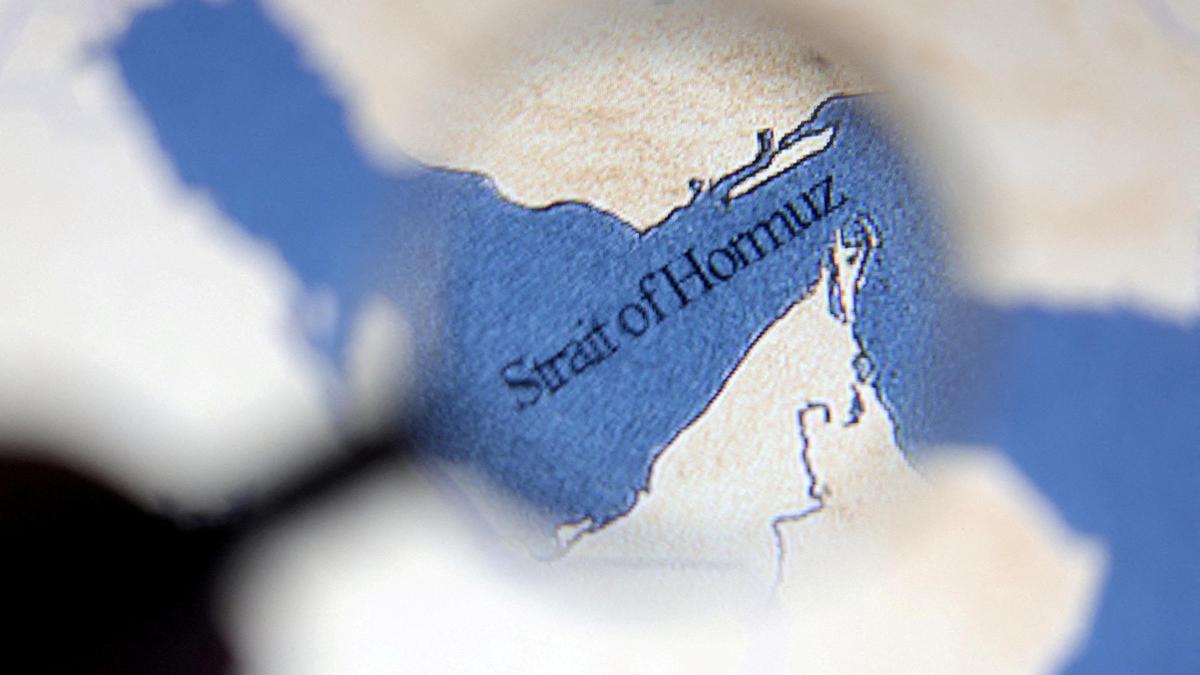
Iran is currently attempting the most audacious shake-down in maritime history, turning a global shipping lane into a private, high-stakes toll road. By April 2026, the Islamic Revolutionary Guard Corps (IRGC) has successfully transitioned from a strategy of total closure to one of predatory "monitored transit." They are no longer just blocking the Strait of Hormuz; they are taxing it, charging fees as high as $2 million per vessel for the privilege of not being sunk. This shift has turned twenty percent of the world’s oil supply into a hostage that pays its own ransom every single day.
While the Trump administration claims the US military is "clearing" the waterway, the reality on the water is a grinding, asymmetric mess. It is not a battle of fleets, but a battle of insurance premiums and satellite signals. For a different perspective, see: this related article.
The Architecture of a Digital Blockade
Traditional naval blockades involve rows of steel warships. Iran’s 2026 model is far more elusive. It relies on a three-tier system of physical threats, hidden hazards, and electronic deception that makes navigation a gamble most commercial captains refuse to take.
The first layer is the "hidden threat." Since the outbreak of hostilities on February 28, the IRGC has seeded the narrowest points of the Strait with unanchored sea mines. These are not high-tech weapons; they are cheap, effective, and terrifying. Even the rumor of a drifting mine is enough to send insurance rates into the stratosphere. Lloyd’s of London doesn't care if the US Navy is nearby if a $200 million tanker can be crippled by a 1970s-era contact mine. Similar insight regarding this has been published by TIME.
GPS Spoofing and the Ghost Fleet
The second layer is more sophisticated. Commercial vessels are reporting widespread GNSS (Global Navigation Satellite System) jamming and spoofing. Tankers frequently see their onboard displays show them miles away from their actual position, sometimes placing them deep within Iranian territorial waters. This is a deliberate trap. Once a ship "strays" according to Iranian sensors, it provides the legal and tactical pretext for an IRGC boarding party to intercept.
The third layer is the sheer cost of confrontation. Iran has deployed hundreds of Shahed-136 drones—disposable, loud, and lethal enough to puncture a hull. Intercepting a $30,000 drone with a $2 million SM-2 missile is a losing mathematical equation for the US Fifth Fleet. It is a war of attrition where the goal isn't to sink the US Navy, but to make the cost of protection higher than the global economy can bear.
The Rise of the Sovereign Toll
Perhaps the most overlooked factor in the current crisis is the legal "protocol" Iran is currently drafting. Tehran is no longer content with being a regional disruptor; they want to be the permanent landlord of the Persian Gulf.
Iranian officials are pushing a joint management agreement with Oman to formalize supervision of the Strait. This isn't about safety. It is about the "tolls" passed by the Iranian parliament. For a tanker to pass safely, the IRGC is demanding payments that could generate up to $100 billion annually. This would functionally replace their lost oil revenue from sanctions, creating a self-sustaining war machine funded by the very countries it threatens.
- The Extortion Rate: Up to $2 million per ship.
- The Hostage Count: Roughly 1,000 ships currently sitting in a holding pattern.
- The Asian Exposure: 75% of the oil and 59% of the LNG passing through here is bound for China, India, Japan, and South Korea.
This creates a bizarre geopolitical paradox. While the US and Israel strike Iranian missile sites, China—Iran's largest customer—is quietly being asked to foot the bill for the disruption through higher energy costs and potential transit fees.
The Desalination Crisis
We often talk about the Strait of Hormuz in terms of oil, but for the residents of the Gulf Cooperation Council (GCC) states, the stakes are more visceral. It is about water.
The modern cities of Doha, Dubai, and Kuwait City are biological miracles sustained by desalination. These plants require massive amounts of energy and, more importantly, a stable maritime environment for the import of spare parts and chemicals. Iran’s strategy of "asymmetric punishment" has targeted these vulnerabilities.
By disrupting the transit of non-oil commodities, Iran has triggered a food and water security crisis. Around 70% of the food for the GCC enters through this bottleneck. When the price of a gallon of milk rises faster than a gallon of gas, internal political stability in the UAE and Saudi Arabia starts to fracture. This is the "why" behind the IRGC's targeting of merchant ships like the Skylight and the MKD VYOM. They aren't just trying to stop oil; they are trying to starve the political resolve of the US's regional allies.
The Illusion of Re-Opening
President Trump's March 9 claim that the Strait had been "re-opened" was, at best, a premature assessment of military success. Sinking the Iranian surface navy—which the US effectively did in the first two weeks of the war—does not solve the problem.
A navy of "fast attack" small boats and hidden missile batteries in the Zagros Mountains cannot be "sunk" in a traditional sense. They are a "mosaic defense," decentralized and designed to survive the loss of central command. Even with the US Fifth Fleet conducting mine-clearing operations as of April 11, the Strait remains operationally constrained.
True freedom of navigation isn't just the absence of a blockade; it is the presence of predictability. As long as the IRGC can launch a single drone from a mobile truck or drop a single mine from a civilian dhow, the Strait is closed to the global economy.
The battle for the Strait of Hormuz has evolved into a permanent state of managed volatility. Iran has learned that they don't need to win a war to control the world’s most important waterway; they just need to make the alternative to their control too expensive to contemplate. The world isn't waiting for the Strait to open. It is waiting to see if it can afford the price of the new Iranian gatekeeper.
The current ceasefire talks in Islamabad will likely pivot on this single, brutal reality. Iran will offer to "stop firing" only if the world recognizes their right to "supervise." If that happens, the Strait of Hormuz will no longer be an international waterway. It will be an Iranian asset.
The US military can clear the water of mines, but it cannot clear the board of Iran's geographical leverage. Every day the standoff continues, the "troll under the bridge" becomes a more permanent part of the global trade architecture.
The real victory for Tehran isn't destroying a carrier; it's making the world accept the toll.