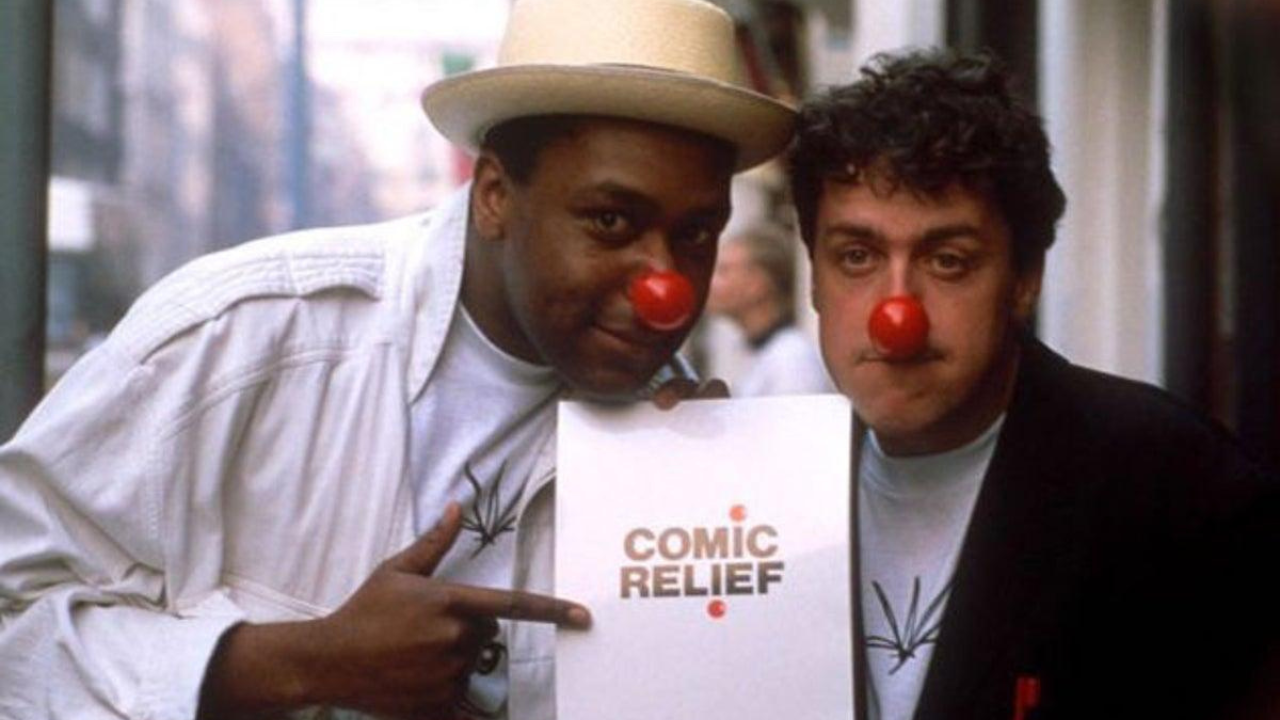
The prevailing narrative around Comic Relief is a warm, fuzzy bedtime story for the British middle class. You know the script. In 1985, Richard Curtis and Lenny Henry looked at the Ethiopian famine, realized traditional charity appeals were too bleak, and invented a brilliant formula. Put a red nose on a comedian, broadcast six hours of prime-time television, and watch £1.6 billion roll in to save the world.
It is a seductive myth. It is also a massive distraction from the structural reality of the charity-industrial complex.
When legacy media outlets celebrate that £1.6 billion headline figure, they are engaging in lazy consensus journalism. They treat total revenue raised over forty years as proof of systemic impact. In the non-profit and international development sectors, measuring success purely by gross fundraising volume is the rookie mistake that keeps broken models alive. Having spent years dissecting charitable balance sheets and watching major NGOs burn through millions in unrestricted donor capital on brand maintenance, I can tell you that the real story of Comic Relief isn't about how comedy cured poverty. It is about how entertainment laundered Western guilt and turned structural economic exploitation into a consumable television event.
The "White Savior" Business Model Disguised as Banter
To understand why the standard Comic Relief origin story fails, you have to look at the mechanics of what sociologists and aid critics call "poverty porn."
In the mid-1980s, following Bob Geldof’s Band Aid and Live Aid, the British public was experiencing donor fatigue. Traditional charity commercials—featuring starving children with flies on their eyes—were causing viewers to change the channel. Richard Curtis, a master of romantic comedy and emotional manipulation, solved a marketing problem, not a humanitarian one. He realized that if you sandwich the tragedy between a Blackadder sketch and a stand-up routine, the audience won't reach for the remote.
This created a transactional loop that persists today:
- The Emotional Hook: A wealthy British celebrity flies to a sub-Saharan African nation for four days.
- The Performative Tears: The celebrity stands beside a malnourished child or an impoverished mother, visibly weeping on camera while describing the resilience of the locals.
- The Comedic Release: The broadcast cuts back to a warm London studio where the audience is told that donating £10 buys a mosquito net, instantly absolving them of the discomfort they just felt.
For decades, this formula was untouchable. Anyone who questioned it was branded a cynic who wanted children to starve. Then came the 2020 backlash, led by UK Labour MP David Lammy, who publicly called out Stacey Dooley and Comic Relief for perpetuating "tired and unhelpful stereotypes" of Africa as a helpless continent waiting for white British celebrities to rescue it.
Comic Relief eventually bowed to the pressure, announcing they would stop sending celebrities to Africa to make emotional appeal films and would instead hire local filmmakers. That admission alone proves the contrarian thesis. If the original model was an unmitigated triumph, why did the organization itself have to dismantle its signature storytelling device? Because the model prioritized the donor's emotional catharsis over the recipient's dignity.
Gross Revenue vs. Systemic Reality
Let’s look at the £1.6 billion figure that headlines every anniversary piece. Over a 40-year span, £1.6 billion averages out to roughly £40 million per year. In the world of charity, that sounds like a titan. In the world of global macroeconomics, it is a rounding error.
To put that number into sharp focus, consider what actually moves money in and out of the developing world. According to research from organizations like Global Financial Integrity and the Tax Justice Network, developing nations lose hundreds of billions of dollars every single year to illicit financial flows, corporate tax avoidance, and unfair trade tariffs imposed by Western governments—the very governments whose state broadcaster airs Red Nose Day.
Here is the uncomfortable math nobody wants to put on a telethon tote board:
- Annual Comic Relief average: ~£40 million.
- Annual illicit outflows from Africa alone: Over $80 billion (roughly £63 billion), according to the United Nations Conference on Trade and Development (UNCTAD).
- UK arms sales and corporate extraction: Billions in revenue flowing back into London financial markets.
When a prime-time BBC broadcast convinces millions of viewers that buying a plastic red nose at Sainsbury's is the primary mechanism for solving global inequality, it actively suppresses political literacy. It trains the public to view poverty as a natural disaster—like an earthquake or a meteor strike—rather than the predictable outcome of specific trade policies, debt structures, and corporate behaviors.
Imagine a scenario where a town's water supply is being poisoned by a local factory. Every Friday night, the factory owners host a comedy gala to raise money for bottled water for the townspeople. Nobody would call the factory owners heroes; they would call it a public relations smokescreen. Yet, on a geopolitical scale, celebrity telethons function in the exact same way. They generate immense cultural goodwill for the establishment while leaving the root causes of extraction completely untouched.
The Hidden Economics of "100% of Your Donation"
One of Comic Relief’s most famous marketing hooks—and a favorite talking point for uncritical journalists—is the promise that 100% of public donations go directly to charitable projects.
In the nonprofit world, this is known as the "overhead myth," and it is one of the most destructive illusions in modern philanthropy. Running a massive, multi-million-pound media and grant-making operation is not free. Staff require salaries. Legal teams require retainers. Financial auditors, safeguarding officers, and IT infrastructure cost millions of pounds annually.
So, how does Comic Relief claim 100% of your donation goes to the cause?
They cover their operational and administrative costs through corporate sponsorships (supermarkets, banks, telecom giants), Gift Aid tax reclaims from the UK government, and interest earned on held funds. On the surface, this looks like brilliant financial engineering. In practice, it creates a massive corporate dependency that compromises the organization's moral authority.
When your operational survival depends on major high-street banks and multinational retailers using your red nose as a corporate social responsibility (CSR) badge, you can never bite the hand that feeds you. You will never see a Comic Relief sketch calling out the supply-chain labor abuses of its retail partners or the fossil-fuel investments of its banking sponsors.
Furthermore, the "zero overhead" promise trains donors to believe that administrative competence is a sin. Charities are forced to starve their own operational infrastructure to appease public sentiment. In 2018, the Charity Commission for England and Wales had to step in after major aid organizations—including Oxfam and Save the Children—were rocked by sexual misconduct and safeguarding scandals. One of the root causes identified across the sector was chronically underfunded HR, compliance, and field-oversight departments. You cannot safely deploy tens of millions of pounds into complex, high-risk environments on a shoestring administrative budget.
Dismantling the Common Questions
If you search for Comic Relief online, the public queries reveal just how deeply the PR narrative has embedded itself into the cultural consciousness. Let’s strip the spin away from the questions people actually ask.
Did Comic Relief actually solve the 1985 Ethiopian famine?
No. Famines are almost never caused solely by a lack of food; as Nobel Prize-winning economist Amartya Sen famously proved, famines are caused by failures in food distribution, war, and political repression. During the 1983–1985 Ethiopian famine, the ruling Derg military junta, led by Mengistu Haile Mariam, actively used starvation as a weapon of war against rebel provinces in Tigray and Wollo. Investigative reporting by the BBC and human rights organizations like Human Rights Watch later revealed that massive amounts of Western aid money and food supplies were diverted by the Ethiopian government to fund its military and forced resettlement programs—programs that killed tens of thousands of people. Throwing cash at a war zone without political leverage doesn't solve a crisis; it often subsidizes the combatants.
Is the Red Nose Day model still relevant in the digital age?
It is dying, and the ratings prove it. Linear television is collapsing, especially among audiences under 40. In its peak years in the 1990s and early 2000s, Comic Relief regularly pulled in over 10 to 15 million viewers, dominating the national conversation. By the mid-2020s, viewing figures for the main BBC One broadcast had plummeted to roughly 2 to 3 million. Young audiences have largely rejected the top-down, celebrity-curated telethon format. They can see the manufactured emotion through the screen, and they prefer direct peer-to-peer crowdfunding (like GoFundMe) or grassroots mutual aid where they don't have to watch a millionaire comedian cry in a safari vest to feel involved.
Why do celebrities really participate in Red Nose Day?
Altruism is a convenient byproduct, not the primary driver. For an actor, musician, or television presenter, a prime-time slot on Comic Relief is the single highest-converting PR placement in the British entertainment industry. It humanizes their brand, aligns them with a beloved national institution, and puts them in front of millions of viewers right before a new book, tour, or television series launches. It is a risk-free reputation enhancer. If they do a grueling physical challenge—like climbing Mount Kilimanjaro or swimming the English Channel—they get weeks of sympathetic tabloid coverage that money literally cannot buy.
What Actually Works (And Why It Isn't Funny)
Let’s be fair to the contrarian stance and admit its biggest limitation: nuance does not raise £40 million on a Friday night.
If you put an economist on BBC One to explain how agricultural subsidies in the European Union and the United States undercut West African cotton farmers, viewers will switch to Netflix within ninety seconds. Comic Relief succeeded as a fundraising engine precisely because it bypassed the brain and aimed straight for the dopamine receptors. Comedy plus guilt equals cash. Without that emotional manipulation, tens of thousands of grassroots community projects in the UK and abroad—funding everything from domestic violence shelters to mental health clinics—would never have received a penny.
That is the paradox of mass philanthropy. The very mechanisms required to extract money from an apathetic public are the mechanisms that distort the public's understanding of the problem.
However, if the goal is genuine, lasting impact rather than an annual televised pat on the back, the charitable sector and the donors who fund it have to abandon the telethon mindset. Real change requires boring, unglamorous, structural interventions:
- Unrestricted Direct Cash Transfers: Organizations like GiveDirectly have proven through rigorous randomized controlled trials that simply giving cash directly to the world's poorest households—with zero strings attached and zero celebrity intermediaries—outperforms almost every traditional aid intervention. Poor people know what they need better than a television producer in London does.
- Local Ownership of Narrative and Capital: Funding must flow directly to indigenous, locally led organizations without passing through layers of Western administrative middlemen. If a charity spends 30% of its energy translating its work to satisfy Western donor sensibilities, it is failing its primary mission.
- Political and Corporate Accountability: If you want to help developing economies, stop buying plastic novelty noses manufactured in factories with questionable supply chains and start demanding aggressive enforcement against corporate tax havens, predatory sovereign debt restructuring, and unfair trade barriers.
Comic Relief was a brilliant piece of 20th-century television engineering. Richard Curtis and Lenny Henry proved that you could turn empathy into a prime-time ratings juggernaut. But confusing a successful fundraising broadcast with a solution to global poverty is like confusing the applause at the end of a play with real life. The lights come up, the celebrities go back to their mansions, the viewers feel good about themselves, and the structural machinery that creates the poverty keeps running at full speed.